Applause for the Dead
The Cultural Logic of Celebrating the Pneumatic Type While Eliminating the Pneumatic Person
A quick primer on some terms used in this essay. The first 3 come from Valentinian Gnosticism, the last is my own category.
Pneumatic: Spirit-driven. Capable of direct gnosis—unmediated knowing that bypasses external authority. Thinks from essence.
Psychic: Soul-driven. Needs framework, doctrine, moral scaffolding. Can achieve insight but requires guidance, structure, external reference points.
Hylic: Matter-driven. Operates on appetite, reflex, social mimicry. No interior life to speak of—purely reactive, purely surface.
Mimic: The counterfeit. Performs pneumatic or psychic signals without substrate. A cargo cult of consciousness—goes through the motions, hits the marks, but there's nothing home.
I. The Architecture of the Contradiction
The pneumatic type—the figure capable of direct gnosis, unmediated knowing, sovereign interiority—saturates our popular imagination with a kind of reverent hunger. Sookie Stackhouse reads minds and walks between worlds. Claire Fraser steps through standing stones and rewrites history with her hands. Emma Swan breaks curses by refusing to believe in her own impossibility. Daenerys Targaryen walks out of fire holding dragons. Jon Snow comes back from death with his integrity intact. Katniss Everdeen stands in the arena and makes symbols out of her refusal to perform. These are figures who know things—who operate from essence, who cannot be talked out of what they see, who make the plot possible by being structurally unable to submit to the frames that would contain them.
We cannot get enough of them. We build franchises around them. We write think pieces. We cosplay their refusal.
And yet the culture maintains a second posture, running in perfect parallel: organized, implacable hostility toward the actual pneumatic person. Not the celebrity with a trauma memoir and a production deal—those are safely captured, monetized, integrated into the validation economy. I mean the pneumatic without institutional backing, without a platform that answers to shareholders, without the safety of being fictional or dead or so famous that their extinction would make headlines. The one who sees clearly and says so. The one whose presence destabilizes the room simply by declining to perform the expected confusions. That figure does not get a franchise. That figure gets managed.
These two postures are not in tension. They do not contradict each other in any way that suggests malfunction or hypocrisy. They are structurally load-bearing for each other—the dream of the pneumatic and the elimination of the pneumatic operating as two sides of a single apparatus. The contradiction is so complete, so consistently executed across every domain of cultural production, that it reads as architectural. Not accidental. Not even cynical, really. Simply: designed. The monetization of the fictional type and the management of the real one are two arms of the same system.
II. Why the Fictional Pneumatic Is Safe (And the Actual One Is Not)
The frame does all the work. Behind glass, threat becomes entertainment. What would be intolerable in a coworker becomes magnetic in a protagonist. This is not subtle and it is not accidental.
Death Glamour—that cold, self-contained refusal to flinch—makes you want to destroy someone at the office and makes you want to watch someone on screen for eight seasons. The refusal of hierarchy: collectively punished in real life, reliably coded as heroic in fiction. A woman who will not defer, will not smooth, will not manage your comfort by performing her own uncertainty? In the break room, she's "difficult." On HBO, she's getting Emmy nominations. Interior self-sufficiency—the condition of not requiring external validation to know what you know—reads as cold and arrogant when you have to sit across from it at a meeting. In a character, it reads as mysterious. Compelling. The kind of thing that makes you lean forward.
The mechanism is simple and crucial: the fictional pneumatic cannot make you feel what you are by contrast. She cannot walk into the room and make the seams show. She cannot fail to need your approval in a way that suddenly makes your own need for approval visible, structural, perhaps even humiliating. She does not sit in the staff meeting and decline to laugh at the joke everyone else is laughing at, thereby turning the joke into a test you didn't know you were taking. She does not refuse the performance of confusion in a way that suggests she sees exactly what you are performing and has chosen not to join you.
She exists behind glass—which means her most threatening qualities become her most watchable ones. You can love her refusal because it costs you nothing. You can admire her clarity because it does not require you to question the fog you live in. You can watch her survive what would kill a normal person and feel inspired rather than accused. The glass makes all the difference. It turns the pneumatic into content. And content cannot look back.
III. The Mirror Economy's Most Elegant Product
Packaged pneumatic energy is the mirror economy's premium offering. All the generative charge, none of the existential threat. All the contact with genuine interiority—safely contained, no reckoning required, no cost to your own self-conception. You get to feel what it's like to be in the presence of someone who knows things directly, who operates from essence, who cannot be argued out of what they see. And you get to feel it without the structural demand that presence makes when it's not behind glass.
Because the real thing asks something of you. Not intentionally. Not demandingly. Structurally, by existing without the frame. The actual pneumatic in the room—unmonetized, uninstitutionalized, simply present—creates a field effect. She makes the performed confusions visible as performances. She makes your need for external validation suddenly loud. She makes the consensus you've been calling reality look like a convention you've been calling truth. This is not something she does. It is what happens when interiority that doesn't require your agreement shares space with interiority that requires everyone's agreement to hold its shape.
The fictional pneumatic lets you off the hook entirely. You get the feeling of recognition—that shiver of yes, that, exactly—without the cost of what that recognition would mean about your own interior condition. You can watch Claire Fraser refuse every compromise and feel seen. You can watch Daenerys walk into fire and feel something in you confirmed. And then you can close the laptop and go back to the life where you perform the expected confusions, manage other people's comfort, and police anyone who doesn't. No contradiction. No cognitive dissonance. The glass does all the work.
The derivative forms are everywhere. The pneumatic-coded protagonist, laundered through genre—fantasy, sci-fi, prestige drama—makes the type broadly accessible while keeping it safely fictional. You can love her in Westeros. You can root for her in the Upside Down. You can write fan theories about her arc. And the more accurate the portrayal, the more beloved the character becomes—which means the more efficiently the pressure valve operates. The culture gets to celebrate everything it would eliminate in reality, and call that celebration proof of its own openness, its own sophistication, its own capacity for admiring what it absolutely will not tolerate at the next desk over.
IV. The Narrative Provides What the Social Environment Cannot
The resolution arc is where the magic happens. The vindication moment. The community that finally sees her, finally gets it, finally makes room. The narrative gives the pneumatic what reality will not: reception. Belonging. The end of exile. And the audience gets to feel the warmth of that recognition without being the community that must supply it. You can weep when Sookie finally finds people who don't punish her for hearing thoughts. You can cheer when Emma breaks the curse and everyone remembers who they are. You can feel that swell of rightness when Jon Snow's loyalty is finally recognized, when Katniss's refusal becomes the thing that saves everyone.
Catharsis without accountability. The two registers—screen and actual life—remain hermetically sealed. You participate in the fictional welcome without ever having to ask why you've never extended it in reality. The collective elimination of real pneumatics continues undisturbed. No cognitive dissonance required. You can watch the arc where she's vindicated and still be part of the social organism that punishes her analog at work, at the bar, in the group chat, in every non-institutional setting where her presence would make the performed confusions visible.
The narrative essentially does the moral work the culture refuses to do—and in doing so, releases the tension that might otherwise accumulate into actual reconsideration. It offers resolution on terms that cost you nothing. It lets you feel like you're on the right side, like you would recognize her, like you would be the one who sees. And because the feeling is satisfied, the question never gets asked. The pressure dissipates harmlessly into entertainment.
The corollary is perfect: the more satisfying the fictional resolution, the less pressure there is to examine why the real-world version is never welcomed. The better the arc, the less the reckoning. We have tuned this machine to precision. We know exactly how much fictional vindication it takes to make the actual elimination feel like something other than what it is.
V. The Pressure Valve Function
The well-crafted fictional outlier does something elegant: it simultaneously honors the pneumatic type and metabolizes the cultural threat she represents. Every beloved fictional anomaly slightly reduces the urgency around the actual one. The hunger that might otherwise drive someone toward genuine encounter with real difference—the kind that costs something, the kind that asks you to adjust your reality rather than simply consume hers—gets fed by proxy. Efficiently. On demand. Through a medium that requires nothing of you but attention and perhaps a subscription fee.
The actual pneumatic remains as isolated as ever. More isolated, perhaps, because the culture can now point to its own exhaust—look at all these exceptional women we celebrate—as proof that the problem is not systemic hostility but her own failure to be exceptional in the right way. Meanwhile, her fictional counterpart has millions of devoted fans. Think pieces. Convention panels. Entire wikis dedicated to parsing her choices, her arc, her ultimate vindication.
The shows are not a tribute that accidentally serves as a pressure valve. The pressure valve function may be the primary one. This is what makes the system so efficient: it looks like recognition. It feels like progress. The fictional pneumatic gets her moment, her arc, her community of fellow outsiders who finally see her. And because you participated in that recognition—because you watched, because you cared, because you felt that surge of yes—you are absolved. The moral transaction is complete. You have done the work of seeing. That it was done in a medium that requires no actual adjustment to your own environment, no reckoning with your own complicity in the elimination of her real-world analog, is the point. Not a bug. The point.
Corollary: genre cycles that produce a glut of "exceptional woman/outsider" narratives tend to coincide with periods of heightened real-world hostility toward actual exceptional women and outsiders. The Trump era gave us peak prestige drama about women who refuse. The MeToo moment gave us an entire Marvel phase of stories about the cost of being different. The fiction absorbs the energy that might otherwise demand social adjustment. It rechannels revolution into rewatch value. We are very, very good at this.
VI. Many Audiences, Many Experiences
The psychic watching gets two hours of contact with what they might have been. The show becomes a window onto lost interior architecture—capacities they once had access to before the validation economy required their progressive outsourcing. The character is a mirror for something they recognize as theirs but can no longer quite reach. They watch and feel that ache of proximity. I used to know things like that. I used to trust what I saw. The narrative gives them supervised access to their own suppressed gnosis, contained safely within a frame that will not require them to act on it. It's nostalgic. It's tender. It hurts in a way they can't quite name.
The pneumatic watching gets recognition without consolation. The character is not aspiration—she is description. Yes, that. Exactly that. The vindication arc is simultaneously validating and quietly painful, because it confirms that the culture understands the pattern well enough to dramatize it, which means the culture understands the pattern well enough to execute it in reality. And none of it is coming. No community of fellow outliers. No moment when everyone suddenly gets it. No third act where the people who eliminated you show up shamefaced with an apology. The show writes the condition with enough accuracy to make the pneumatic feel seen, and that sight comes with the knowledge that being seen in fiction is the substitution the culture offers for being received in reality.
The Hylic watching sees spectacle. Action. Drama. Hot people in categories: the brooding one, the feisty one, the mysterious one. The plot is a series of events. The character is a series of aesthetics. There is no interiority to track because interiority is not a live category. The show works as pure stimulus—things happen, feelings are triggered, the next episode begins. It's entertainment in the most literal sense: something to pass time through. No residue. No questions. Just: what happens next.
The mimic watching gets enjoyment without recognition. The pneumatic-coded character reads as aspirational aesthetic. Her qualities are extracted as style and circulated without content—strong female character, doesn't take shit, mysterious past—a set of poses that can be photographed, quoted, and performed without any of the structural conditions that make the type legible in the first place. The mimic sees a template. A brand. Something to signal alignment with. They will buy the merchandise. They will tweet the quotes. They will perform the refusal in contexts where refusal has been pre-approved. And they will feel they have understood something, accessed something, become something—without ever encountering the thing itself.
The show means something different to each type. And the fact that all four can watch it together, moved for completely different reasons, crying at different moments, taking away completely incommensurate experiences, is itself a measure of how well the packaging works. The pneumatic sits in a theater full of people who think they're watching the same thing she is. They are not. But the fact that the same images can mean four separate things—and satisfy four separate hungers—is the genius of it. Everyone gets fed. No one has to change.
VII. The Sophistication of the Operation
Honor the pneumatic in effigy; destroy her in person. Make the effigy compelling enough that the gap between the applause and the participation never has to be noticed. This is not individual cynicism. This is not a failure of awareness or a lapse in moral consistency. This is the system operating exactly as designed, with a level of coordination that would be impressive if it weren't so thoroughly committed to its own invisibility.
The most elegant possible arrangement: the culture gets credit for the tribute and pays no cost for the bleach. The fictional pneumatic gets eight seasons and a legacy. The actual pneumatic gets managed into invisibility while her type is celebrated in every medium that can monetize her. She gets the representation and the reality simultaneously—her essence projected onto every screen, her person navigating an apparatus the celebration never touches and was never designed to touch.
The operation requires her continued presence to sustain itself. Total elimination would produce a sterility even the fully converted mimic would register as loss. The well has to keep producing or the content dries up. She must be kept just isolated enough to be managed, just visible enough to be packaged, just alive enough to keep generating the thing they can't create themselves but can sell back to her as entertainment. It's almost perfect. It's almost beautiful. It hums.
The screens stay full. The rooms stay empty. And everyone gets to feel like they're on the right side.
Yours from the green room where the cameras never point,
—Majeye

Poor pneumatics…
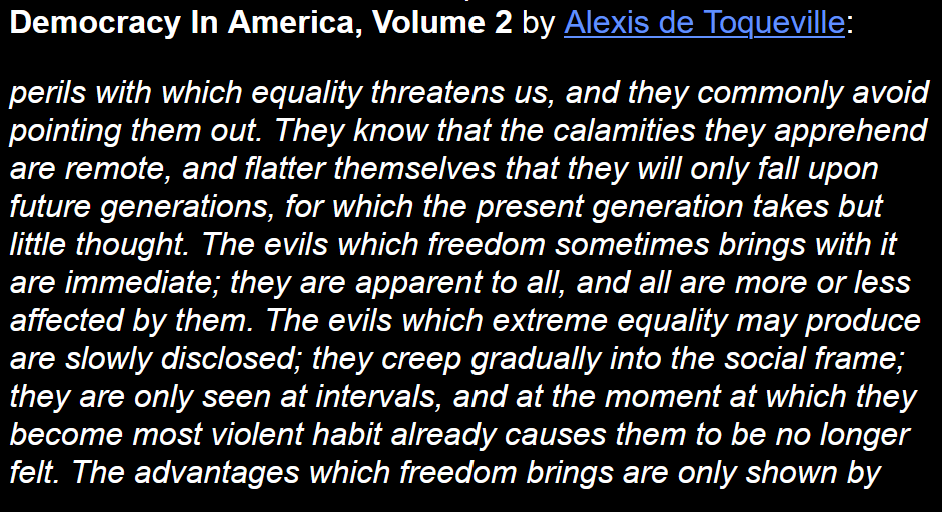
The advantage of the foreign eye: arriving before habit renders catastrophe invisible.
Next Week
Monday: Ironic Distance as Species-Level Threat
Friday: Voilà le Nom!
This post will be a day later than usual as I am submitting my manuscript for copyright that day. The name of my third book will be revealed. More defs, rhymes, and thoughts in celebration.