Welcome to EYEJAM
It’s sticky in here on purpose.
This is the preserve of the poetic predator, the marmalade of the mystic, the compote of conspiratorial delights. Call it what you want—blog, grimoire, confiture chamber—it’s all fruit of the same tree: forbidden, fermenting, and sweet enough to snare a Watcher’s tongue.
EYEJAM is Majeye in reverse. That’s no accident.
I don’t write to explain myself. Only the forbidden fruit gets turned to jam. These pages are preserves for the ones who still remember how to taste.
Here you’ll find ritual poems that purr and bite, essays that expose the spiritual crimes of polite society, adult fairy tales, and posthumous warnings smeared across the metadata in blackberry ink. Think of this place as an interdimensional toast point—where the burnt edges of prophecy get sugared and served back to the system.
If you came looking for safe takes, sterile essays, or dead theology, try Smuckers.
But if you want nectar from the anomaly, dripping from the eye of the storm—
then grab a spoon. Or better yet, use your fingers.
EYEJAM isn’t just for your eyeballs, darling.
Stick around ‘til the end—there’s jam for your ears too.
🎵 Click the song. Get seduced. You know you want to.
A Note on the Nature of This Space
EYEJAM is a thinking-aloud space in the tradition of Montaigne—self-examination conducted in public not because I require an audience, but because the door happens to be unlocked. I don’t claim to know-it-all. I claim to be brave enough to think aloud in a public space without hedging. To ask questions and to follow those questions where they lead.
If my work moves you to respond—in agreement, in opposition, in genuine curiosity—my contact page exists for exactly that purpose.
What I will not pretend to miss: the analytics fingerprint of someone constructing a rebuttal in the dark because I don't have comments turned on. That particular maneuver has a name. It is not critique. It is not conversation. It is the coward's substitute for both, and it is intellectually dishonest. The contact form was right there; I don’t truck with cowards.

The Fable of Dunning and Kruger
Once upon a time, two children walked into a forest with laminated credentials and absolute certainty. The forest, which had not read their certificates, continued to be a forest. One of them ate the wrong mushrooms. The other built a shelter that kept in the cold with impressive consistency. Both died with the serene confidence of people who had scored well on the examination. Their laminated cards survived—they always do—and the woodcutter who found them said nothing over the graves, because the forest had already made the point more efficiently than he could. This is their story. It ends the way it was always going to end. The mushrooms don't care what the certificate says.
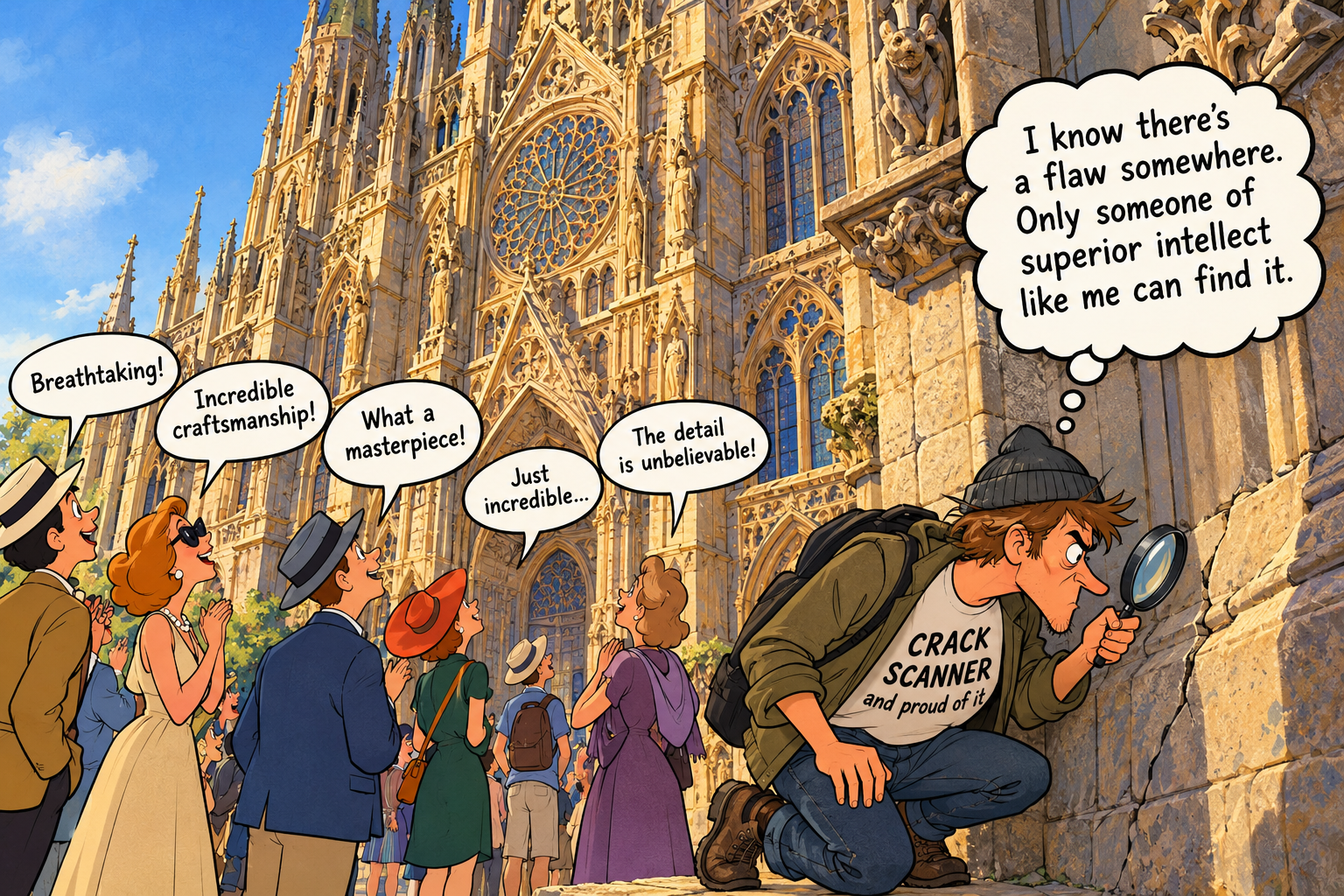
The Crack Scanner: A Field Guide to the Reader Who Isn't Reading
They're out there. Right now. In the comment sections. In the margins. In the reply threads of people braver and more interesting than they'll ever be. They call themselves critical thinkers. They call themselves skeptics. Science, in its infinite patience, calls them Scrutinarius perimetricus—the Crack Scanner—and this field guide is the first honest account of what they actually are, what they actually do, and what it's actually costing them. They came to audit. They stayed to prosecute. They left without being anywhere near the ideas they claimed to engage. This is their story. They won't like it. They'll find a flaw in it. That's kind of the whole point.
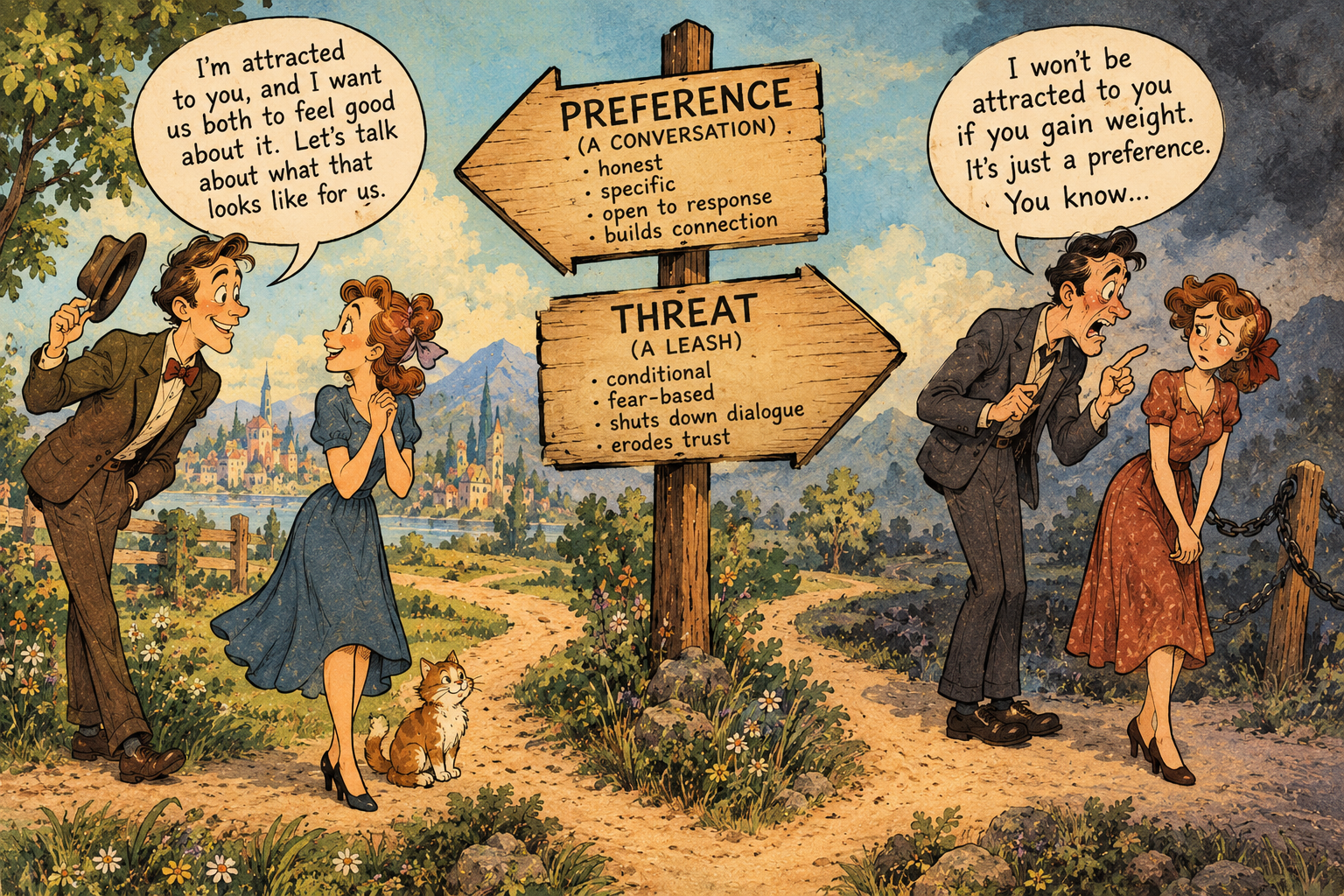
“I Won't Be Attracted to Her If She Regains the Weight”: A Field Guide to Men Who Don't Know What They're Saying
There's nothing wrong with knowing what you find attractive. Desire is real, preferences are real, and pretending otherwise is how people end up in quietly miserable arrangements that collapse on a Tuesday after eleven years. This isn't about that. This is about the difference between a preference and a threat—and why the men who can't tell them apart are accidentally disqualifying themselves from the very thing they want. A field guide, offered in good faith.

The Witch and the Sanctuary: Montespan, Maintenon, and the Soul of Louis XIV
Two women. One king. One of them worked black magick in the basement of Paris trying to hold what was already leaving. The other sat in a quiet room doing needlework and let him come to her. Guess which one ended up with a thirty-year secret marriage and a school that outlasted the monarchy. This one's about power, strategy, and the oldest distinction in the occult tradition—coercion versus alignment. Pull up a chair. It gets dark before it gets illuminating.
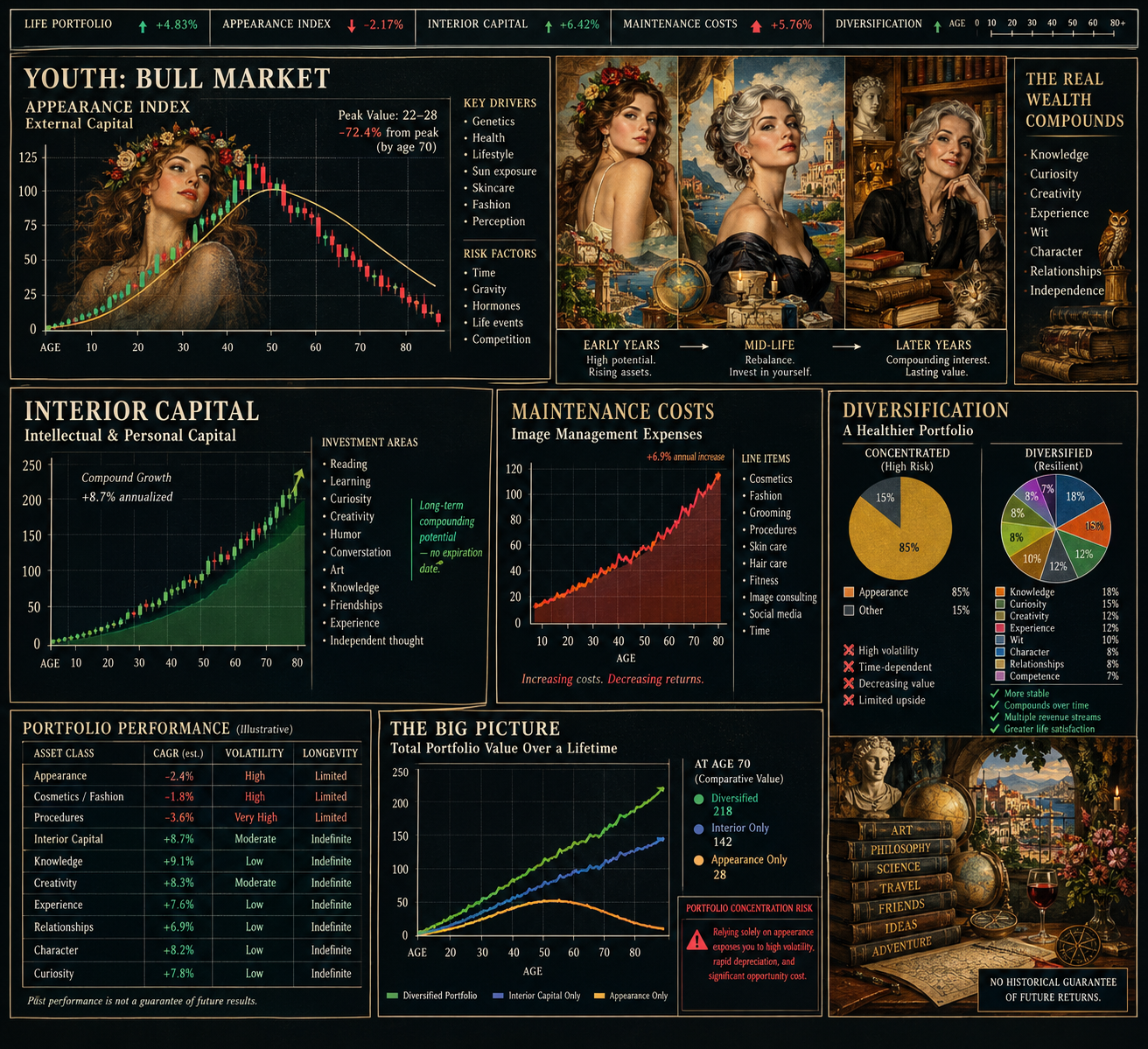
For Women Who Were Never Told: Beauty Is a Depreciating Asset
Financial analysts are sounding the alarm on one of the most common investment strategies among women: allocating the majority of time, money, and energy into outer appearance while the interior portfolio sits largely untouched. Early returns are strong, experts confirm, but the underlying asset is time-denominated—and the maintenance costs only go one direction. A full report on what's atrophying, what's compounding, and why it's never too late to diversify. Read more.

The Mirror Runs Both Ways: How Political Systems Produce the Cultures They Deserve
Every political system tells a story about what a successful human life looks like—and it tells that story not through legislation but through what it rewards, continuously, at scale. The culture you live in isn't an accident or an inevitability. It's a broadcast. And once you see the feedback loop—how systems select leaders, how those leaders shape culture, how that culture produces the next generation of leaders—you can't unsee it. The Mirror Runs Both Ways traces that loop through hereditary aristocracy, extractive oligarchy, and popularity-based democracy, asks what a different system might broadcast instead, and arrives at a conclusion that's equal parts uncomfortable and clarifying: we have exactly the culture our system deserves. The proof is everywhere. You already know it. This just gives it a name.
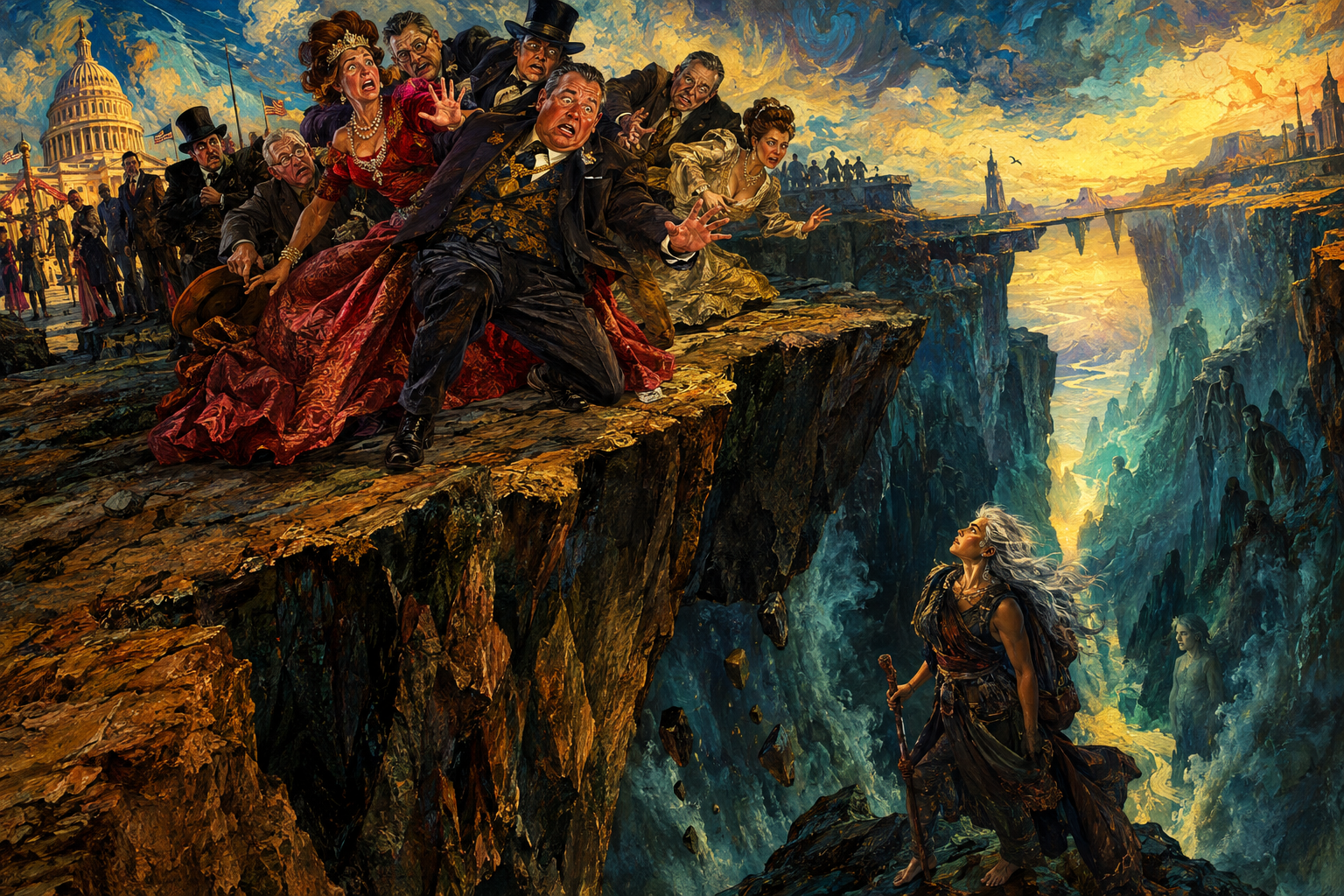
The Aristocracy of the Abyss: A Thought Experiment in Political Philosophy
Every system ever devised to put the best people in charge has ended up putting the wrong people in charge. Not through malice—through structure. The selection mechanism gets captured, the elevated forget what the bottom feels like, and the gap between ruler and ruled becomes the address where corruption lives. But what if the qualification for governance wasn't birth, or wealth, or credential, or ideological compliance—what if it was the abyss itself? What if the people most fit to carry others were precisely the ones who'd already proven they could carry themselves out of the worst possible circumstances, alone, without a net? The Aristocracy of the Abyss is a thought experiment in political philosophy that takes that question seriously—and lands somewhere that should make anyone currently comfortable in power quietly nervous.
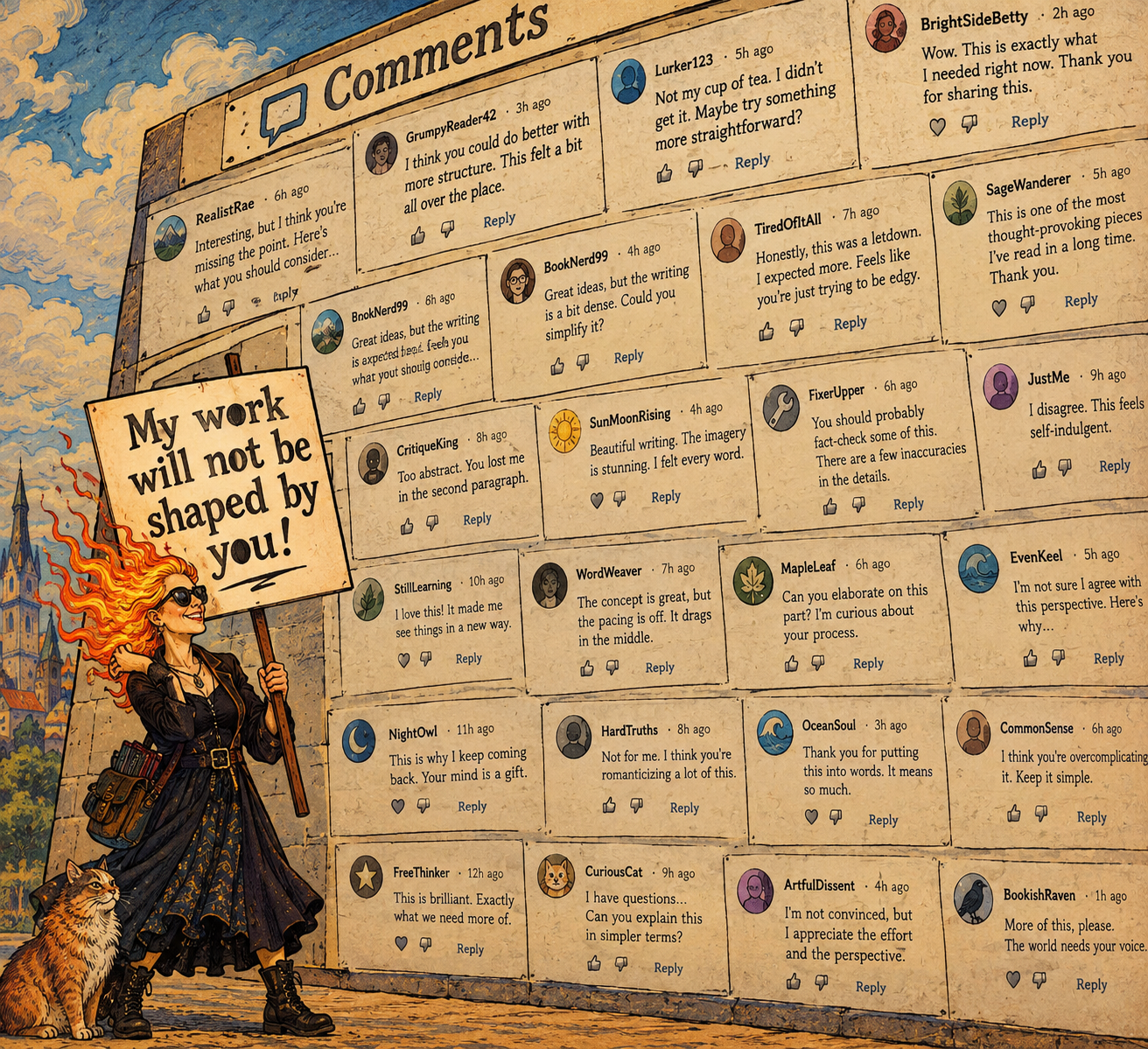
Comments Are Off. That's Not an Oversight.
Comments aren't off because the work is precious or the writer is fragile. They're off because the feedback loop is a trap with excellent branding—and the only way to find out if the work actually stands is to let it stand alone. This is a philosophical position on writing into silence: on Pessoa's trunk, Dickinson's drawer, the unsubscribes that arrive before the second paragraph, and why the future reader isn't a consolation prize. The conversation this work is having isn't with the current moment. It's with the record.

The Arrival
Next installment from my upcoming book, the roman a clef about my time in SF. You’ll begin to see the shape of what the book will be like. Join me if you dare.
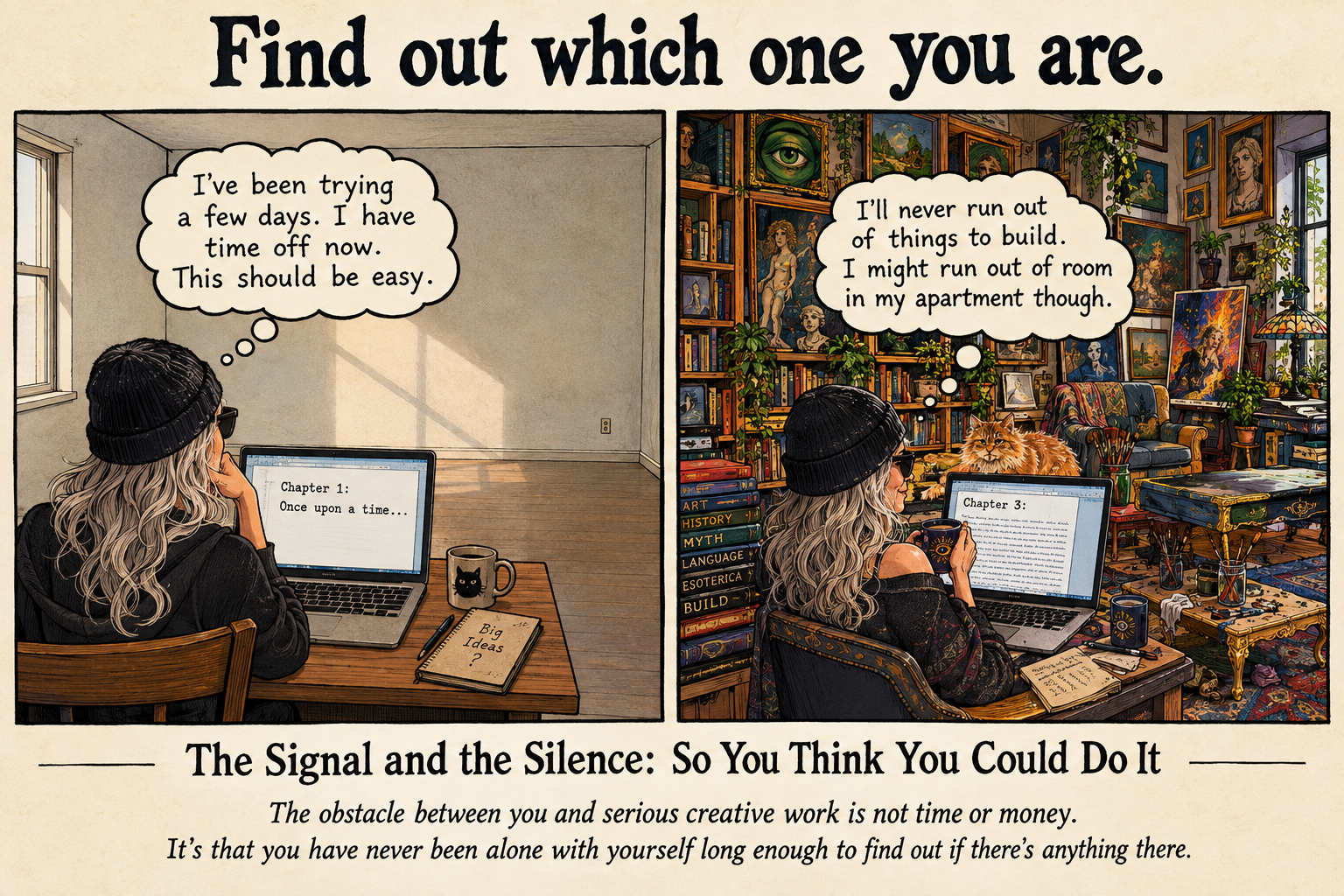
The Signal and the Silence: So You Think You Could Do It
You've said it. Maybe not out loud, but you've thought it—if I had her setup, I could do that too. Totally fair. Completely untested. The uncomfortable truth is that time and money are not the variables you think they are, and the proof isn't theoretical—it's the fact that most people who get the time find out pretty quickly that the time was never the problem. The problem is what's waiting for you in the silence when the excuses run out. This essay is about that. Come in if you dare.

EYEJAM’S one year anniversary!!! WOOHOO!
This is a year in review. I talk about what it’s like writing into a void with no direction. There’s a list of posts from the beginning to now—linked, with short descriptions. There’s also a saucy new ritual poem—written 9/5/26. You’re gonna love it!
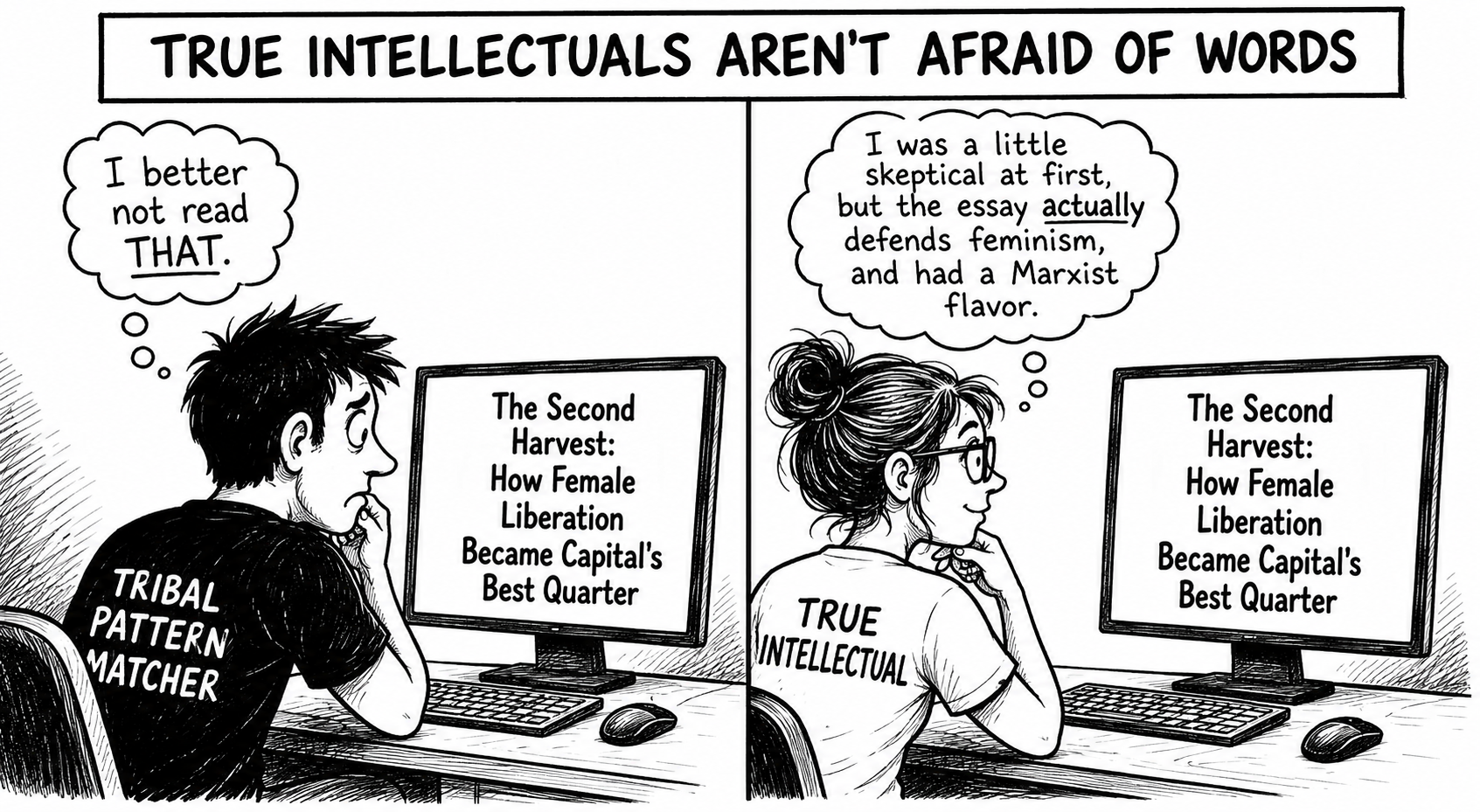
The Flattery Economy: How Audience-Capture Made Everyone Stupid
The algorithm doesn't need to corrupt you. It just needs to reward you—consistently, invisibly, for the things that keep people coming back. What follows is an autopsy of the feedback loop that's quietly retrained an entire generation of writers and readers: how the essay form got hollowed out and reupholstered with the aesthetic of inquiry, how tribal pattern-matching replaced argument evaluation, and why a piece that no one can safely appropriate to either tribe is probably the one most worth reading. Comments are off. The loop has been declined. Come in anyway.
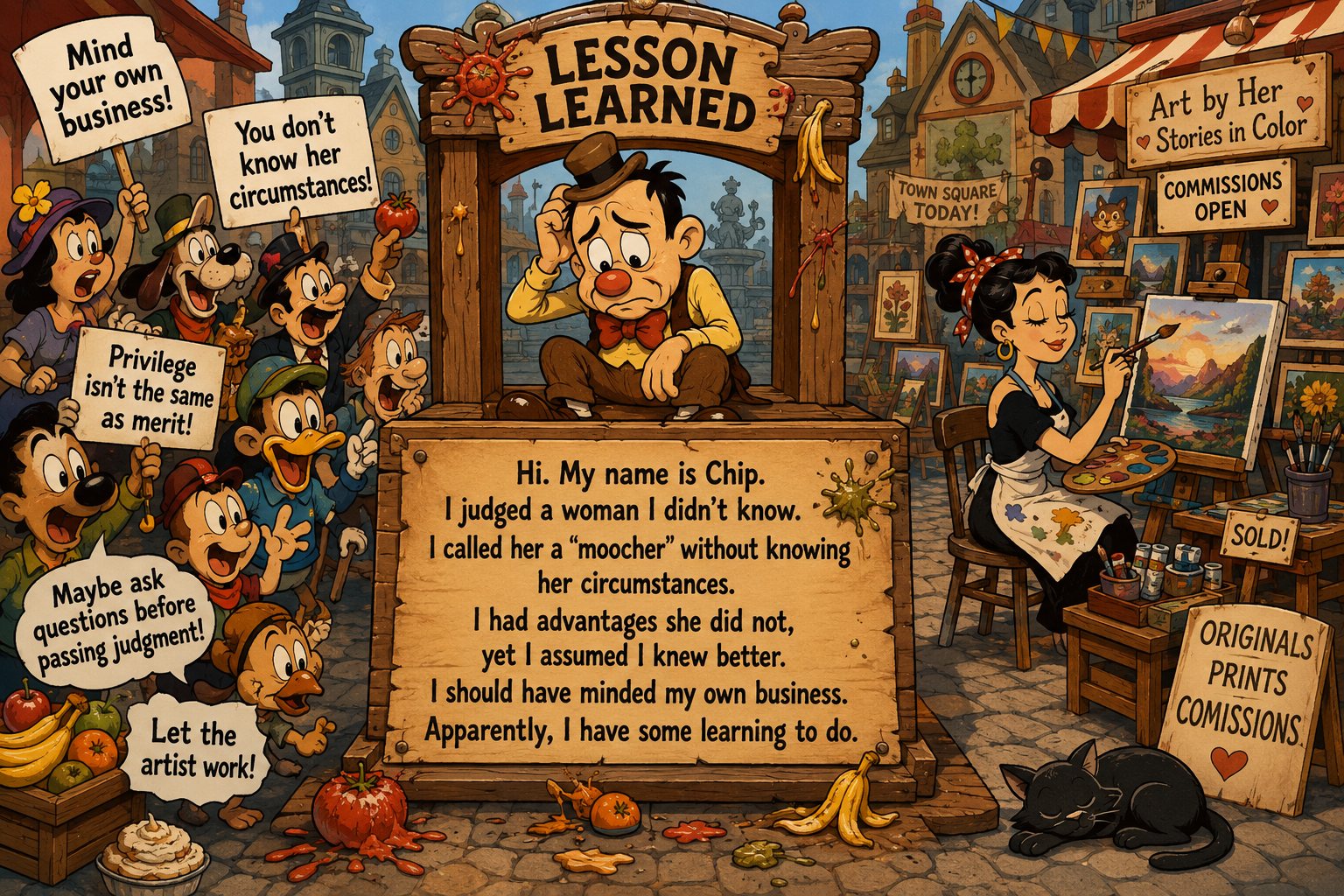
Dot Didn't Mooch. Chip Just Can't Count.
Let's talk about Chip. Chip is not an unusual man. He works a regular job, draws a regular paycheck, and moves through a life made navigable by advantages so thoroughly woven into his experience that he's stopped being able to see them—the family that helped him, the people who vouched for him, the infrastructure that caught him every time he stumbled. None of that makes him a bad person. What makes him the subject of this essay is what he did with all that invisible comfort: he looked at Dot—a woman who built her entire life from scratch, without a net, without a family to call, who survived conditions he wouldn't recognize as survivable, who is now producing serious creative work with the support of a patron—and he called her a moocher. Then he made sure she heard it. This essay is about patronage. It's about what that word has meant across the history of civilization, about Dante and Michelangelo and Baldwin and Woolf and the long, luminous tradition of serious work requiring serious support. It's about why accepting help is not a moral failing and why everyone, including Chip, knows this, or would if they were being honest. And it's about what it means—what it really, specifically, nakedly means—when a man with a floor calls a woman without one by the ugliest word he can find and then makes sure the message is delivered. Chip wanted Dot to feel shame. He should have thought longer about what she does for a living.
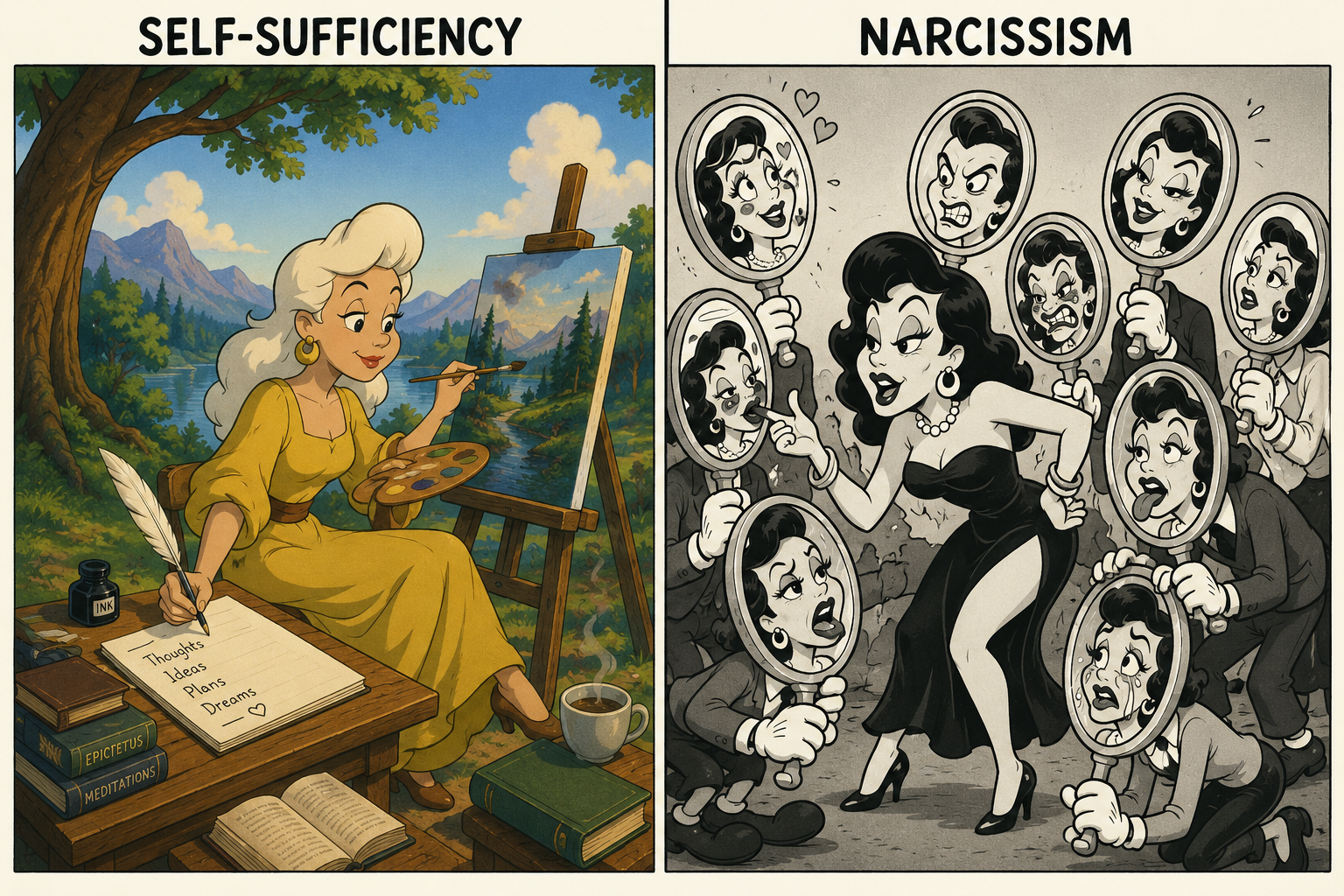
The Misdiagnosis: Why Self-Sufficiency and Narcissism Are Not the Same Animal
The word "narcissist" has been so thoroughly misappropriated that it now means almost nothing—except, vaguely, person who seems too comfortable without me. This post is an intervention. We're restoring the term to its actual clinical meaning, distinguishing it from its structural opposite, and asking three honest questions that cut through the noise. If you've ever been accused of narcissism simply because you're self-sufficient, keep your own counsel, and don't perform your life for public consumption—this one's for you. If you are a narcissist, you probably won't finish it.

Let’s talk about ALCHEMY
You already know something's wrong. You feel it every time you open your phone and close it thirty seconds later feeling vaguely worse about yourself and humanity in general. The noise is loud, the haters are busy, and everybody's made of lead. But here's what they forgot to tell you: lead is the starting material, not the final verdict. In this post, we talk about alchemy—the real kind, the kind that happens in silence, in solitude, in the deliberate and slightly dangerous decision to stop being raw material for other people's agendas and start running your own laboratory. It's part chemistry, part philosophy, part unsolicited but extremely accurate advice.

The Joys of Solitude: Or, What Does She Do In There All Day?
Some people collect friends the way others collect receipts — compulsively, without examining whether any of it is worth keeping. This post is for the ones who raised an eyebrow at that sentence. A dispatch from behind closed doors, where the calendar is full and the guest list is short. What fills the hours when nobody's watching her? More than you'd expect. Possibly more than you could handle.

Ludicrously Maimed: The Architecture of Reputational Destruction
Gossip is as old as dirt and twice as useful—if you're the one holding the shovel. This post traces the surprisingly elegant machinery by which a person's reputation gets quietly disassembled by people who are absolutely certain they're doing the right thing. Kingsley had a name for it in 1880. We have better infrastructure for it now. Dot would like a word.

The Second Harvest: How Female Liberation Became Capital's Best Quarter
There's a version of modern life that looks like progress on every available metric and still feels, to a lot of people, like something essential is missing—some texture, some warmth, some capacity for ordinary human warmth that used to exist and now doesn't. This post starts with a television show and ends up somewhere more uncomfortable: the argument that the disappearance of that feeling wasn't accidental, wasn't inevitable, and wasn't free. Someone paid for the world we have now. Someone else got paid. And the reason we don't talk about it more clearly has less to do with the difficulty of the question than with the remarkable efficiency of the framework that makes asking it feel suspect.

The Obsolescence Gospel: How We Built Ourselves Out of a Job and Then Forgot to Update the Religion
Extra, Extra: Your Purpose Has Been Automated
For many years, humans solved the meaning problem the easy way—they made themselves useful and called it a soul. It worked beautifully, right up until the machines got good enough to be useful too. Now a civilization built on the spiritual bedrock of productivity is staring down an automation wave that doesn't just threaten jobs—it threatens the story. The internal monologue. The reason you matter on a Tuesday. This dispatch traces the whole strange arc: from the woodsmoke-and-bread clarity of pre-industrial necessity, through the Calvinist guilt trip that never quite ended, to the credentialed professional currently discovering that their moat was always a puddle. The diagnosis is grim. The prescription is ancient. And the exit, if there is one, looks suspiciously like becoming the kind of person the Protestant work ethic always quietly despised.

What Bourgeois Virtue Conceals (And Why It Has To)
Bourgeois virtue has always presented itself as self-evident—the natural reward of decent people making decent choices. This post is less convinced. We go after the accounting: where the moral credit actually comes from, who set up the scoring system and why, what happens to people the taxonomy can't file correctly, and what it costs to keep the whole story straight over a lifetime. Balzac makes an appearance. So does the diploma. Neither comes out looking entirely dignified.