The Botanist
I don't typically do reviews—my work with alcohol is communion, not consumption, and rating spirits feels like grading lovers on a scale of one to ten. Crass. Reductive. But every so often, a bottle crosses my threshold that demands acknowledgment, and The Botanist Islay Dry Gin is one such occasion. This isn't your corner-store juniper water. This is hand-foraged alchemy from the Isle of Islay—nine classic gin botanicals forming the foundation, with twenty-two additional ingredients pulled directly from Scottish soil, wind, and myth. Meadowsweet, apple mint, heather, gorse, et al—each one a living signature of place, each one carrying the volcanic memory of peat and salt air. Providence matters in ritual work, as I've written about before in my essay/post “On Meeting the Spirits of Alcohol in Ritual.” When you drink something with this much earth and intention baked into it, when you can trace the lineage of every flower and leaf back to a specific island cradled between the Atlantic and the Irish Sea, the experience shifts. The spirit inside the bottle isn't hollow. It isn't generic. It knows where it came from, and it will show you—if you're quiet enough, patient enough, and awake enough to listen. The Botanist doesn't just taste like Islay. It is Islay, distilled into glass and waiting to be invited into your blood.

If The Botanist had a sigil, this is what it would look like. Every one of the 31 points representing a different herb/flower/plant, each with varied esoteric, cognitive, and ritual properties. Hand-foraged=PROVIDENCE! That last bit can’t be said enough. ;)
I mixed The Botanist with Limoncello-flavored La Croix, and the pairing was divine—creamy citrus pulling forward the floral notes, the carbonation lifting each botanical into sharper relief. This is important: gin rewards restraint. Overpours are counterintuitive to flavor. Use a jigger. Precision matters here, not generosity. You want enough to open the spirit, not drown it. When you get the ratio right, when the botanicals have room to breathe and speak, the effect is unmistakable. The ritual intelligence shifts. You can taste and feel the difference between this and lesser gins—not just in complexity, but in presence. The spirit behind The Botanist has weight, voice, and clarity. Clarity, as those of us who work with gin know, is both a gift and a blade.
What follows are two pieces of poetry—written on different nights, as I almost never mix different kinds of alcohol in the same ritual. The first was composed on ritual gin (The Botanist), sharp and sardonic, the mind still taut with that disembodied, astral quality gin produces. You become all intellect, all edge—floating above your body like a watchful ghost. The second came later in the week, written after drinking a wine I will not name—a wine that pulled me into full embodiment—luscious and heavy. Wine is sensual with a bit of madness. You'll feel the tonal shift immediately. Gin speaks in angles. Wine speaks in curves. Read them back to back and you'll understand what I mean about how different spirits produce different syntax, different cadence, and serve different gods.
On Ritual Gin many days ago :
let's have a bloody holy war
mais oui, a damnable crusade
c'est la, just gossip at the bar
not I! I drank the good Kool aid
On Ritual Wine tonight:
ok, we can have a hole-y war
of course, we'll bring hard poles
the black holy geometric star
showing she can play all roles
space is spinning in our dame
her sonorous notes fill the airs
she's chased into a true claim
the result of their longing stares
spun web is showing more tears
her vortex: a beam to be feared
sheer magnitude of its burnt sears
the testament to her Ol' Wyrd
shadows of the dead, rejoice!
when relentful gave up chases
when miracles have a real choice
when monsters don't hide their faces
May your botanicals be hand-foraged and your ratios exact.
—Majeye
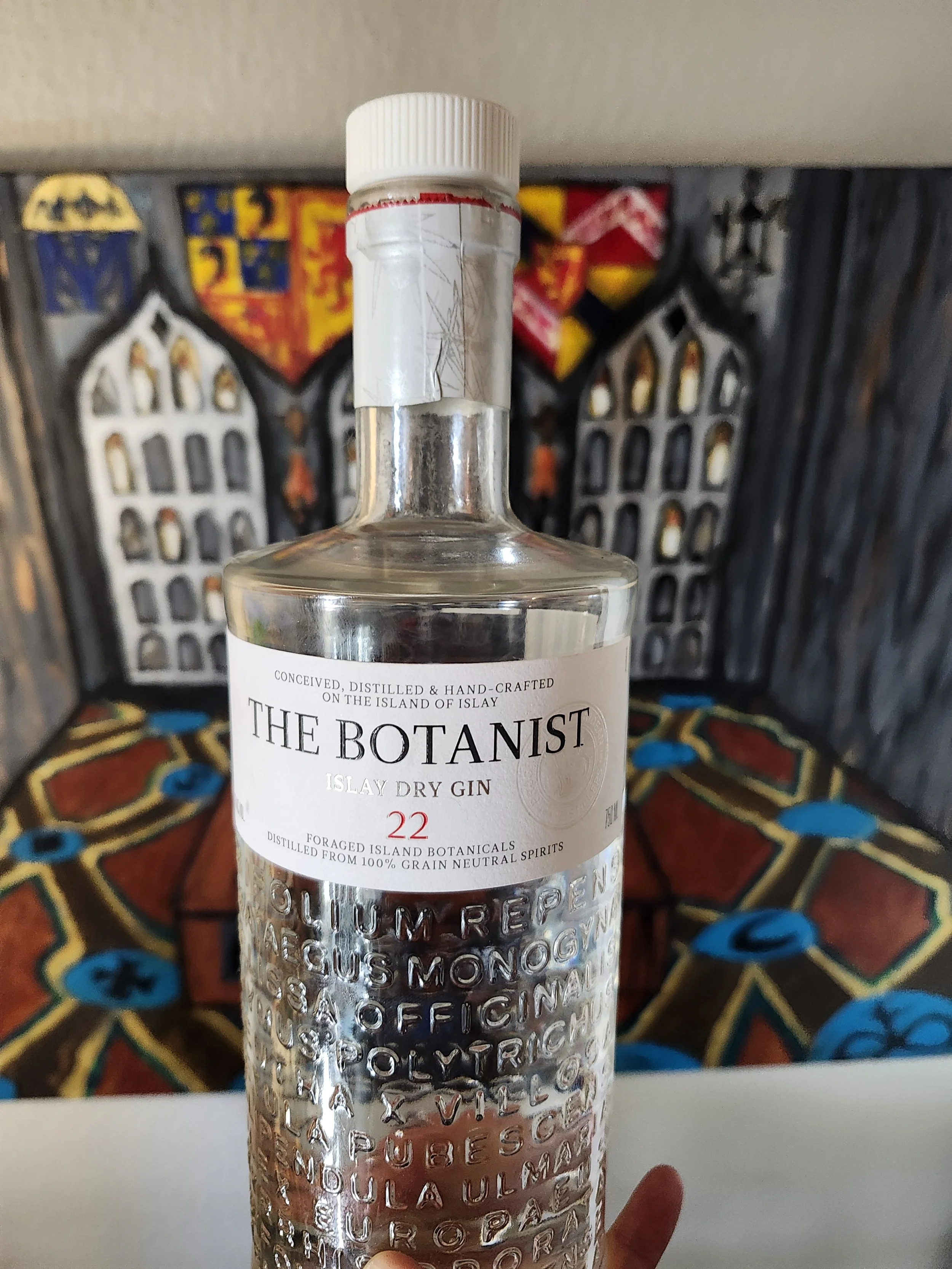
Deeeelishkisss!
Behind The Botanist is my painting called “Mary and Bothwell.” I thought it an appropriate background.