How Systems Learn to Kill the Future
I. Opening Frame: What “Anti-Evolutionary” Actually Means
Let’s be clear from the outset: when I say “evolution,” I’m not talking about moral uplift or the glistening arc of social justice. I’m not interested in utopias or empathy metrics. I’m talking about something far older and colder—the emergence of novel traits. The introduction of difference into the gene pool, the cultural ecosystem, the cognitive field. Evolution is not nice. It is not fair. It does not care who feels safe. It selects for what works—eventually. But before that? It simply lets the new appear. Whether a feather, a neural quirk, or a poem too sharp for its decade.
So when a system reacts to novelty with reflexive suppression—when it misclassifies adaptive strangeness as pathology, or punishes difference for making the group uncomfortable—that is not neutrality. That is not caution. That is anti-evolutionary. I’ve lived through it. You probably have too, in smaller doses. The real threat to progress isn’t chaos—it’s homogeneity enforced under the guise of order. And so I state it plainly, before we go any further: a system that punishes difference to preserve comfort is not neutral—it is anti-evolutionary.
And to repeat this so everyone understands: outer customization has nothing to do with true difference. You can be Goth, pierced, politically radical, spiritually eclectic, or dressed like a Victorian chimney sweep—none of that guarantees evolutionary novelty. What matters is life pattern. How you move. What you build. What you refuse. There are thousands who look “different” but live the same pre-written loops. True evolutionary divergence isn’t aesthetic. It’s structural. It alters the path. It does not care what you wear—it cares what you do. I’ll be doing a post about this next week.
II. The Custodial Mandate (and How It Was Lost)
The American Experiment—whatever else it may have become—was, at its mythic core, a test of custodial intelligence. A bet that brilliance would not only emerge from the margins, but that a system could be built to recognize it. The true custodial mandate, in any evolutionary civilization, is deceptively simple: detect new traits, protect edge cases, and route uncorrupted signal upward. That’s it. The system does not need to invent novelty—just hold still long enough to see it when it flickers. This kind of structure doesn’t run on democracy or decency. It runs on perception. A good custodian doesn’t just enforce order. A good custodian notices the outlier, pauses the machine, and says: “What’s this?”
But somewhere between the draft of that ideal and the present tangle, the mandate was replaced. Not with malice. With policy. Evolutionary detection gave way to risk management. The outlier became a liability, not a resource. The administrator replaced the custodian. Instead of routing signal upward, systems began to smooth it—sanitize, flatten, delay. Reputation became more valuable than revelation. Sameness became safety. And suddenly, novelty wasn’t just overlooked. It was managed out—for optics, for HR, for the spreadsheet’s sake. No one needed to burn the experiment to the ground. They just made it boring enough that brilliance stopped bothering to knock.
III. The Median Failure: Why Edge Cases Terrify Them
The median evaluator does not assess by function. They assess by resemblance. Their compass is comfort. Their metric is familiarity. So when a true outlier appears—when a trait shows up that does not fit the templates they've been trained to recognize—the reaction is rarely curiosity. It is fear. Or worse: envy. This threatens my position becomes this must be invalid. And so begins the slow reflexive downgrading: too intense, too much, too erratic, too weird. In truth, it’s none of those things. It’s just new—and their architecture wasn’t built to notice new. It was built to maintain the center.
But here’s the deeper betrayal: the median was never meant to judge value. That was not their job. Their role in a custodial system is relay—move the anomaly up the pipeline, intact. Do not interpret it. Do not polish it. Do not extract palatable fragments. Just deliver. But somewhere along the line, median actors began to think of themselves as arbiters. Suddenly, it wasn’t about detection—it was about approval. Instead of signal being passed upward, it’s filtered through ego and affinity. They elevate those who stroke their sense of self or match their résumé—and discard what confuses them. This is how perversion enters the pipeline. By the time higher levels finally see the real thing—if they ever do—it’s either been starved, broken, or has self-destructed from prolonged misclassification. The signal arrives late, or not at all.
And in its place: projection. “This would exhaust me, therefore it must exhaust you.” “If I couldn’t survive this path, no one should.” Silence, in this ecosystem, is not restraint—it’s incapacity. They don’t lack empathy; they lack the architecture to imagine a different signal profile. The American experiment, in its boldest hypothesis, wagered that a nation could serve as a crucible for outliers—that brilliance would emerge from unplanned coordinates, and systems would catch it. Not just to tolerate difference, but to protect it—because evolution depends on it. Kill the edge case, and you stall the mutation. Protect the outlier, and you just might change the species.
IV. Dependency as Weakness (The Unnamed Assumption)
There is a quiet belief—almost never spoken aloud, yet foundational to most institutional logic—that productivity requires permission. That in order to create value, you must punch a time card, please a manager, and receive nods from your peers. That coherence of self is only real when it's mirrored back through a team, a Slack thread, a performance review. Fitting in is not just encouraged—it’s required. Entire employment ecosystems are structured to reward likeness and penalize divergence. But here’s the problem: outliers don’t fit. They never have. And while they hold the exact traits most vital to future evolution—original perception, novel pattern detection, high-risk tolerance—they suffer most under this architecture of consensus.
What this reveals is not the outlier’s instability, but the system’s dependency. A need for constant reinforcement. An addiction to mirroring. When someone shows up internally coherent, isolation-tolerant, and unconcerned with approval metrics, the system flinches. It cannot recognize sovereign production—only supervised performance. So it labels independence as a threat. Calls autonomy a symptom. Flags creative solitude as cause for concern. But the inversion is clear to anyone outside the mirror maze: they called independence instability because they cannot survive without scaffolding and social mirroring. The real fragility isn’t in the anomaly. It’s in the herd.
V. False Superiority & the Envy Loop
Positional power has an old trick: it masquerades as intelligence. The assumption is simple—if someone holds authority, they must understand what they’re overseeing. But often, authority is just tenure, not discernment. And when those in evaluative positions sense they are being outpaced—when novelty threatens their crown—they don’t step aside. They reclassify. The outlier becomes a problem. Autonomy becomes deviance. Tone becomes grounds for dismissal. Credentials are weaponized—not to ensure competence, but to gatekeep perception. The irony, of course, is that those who most fetishize social intelligence often reveal themselves to be the most dependent. Their cognition is recursive. They must consult the group before they can think. They call it emotional attunement. It is, more often, strategic neurosis.
But envy dressed in authority doesn’t show its teeth—it speaks in policy. It couches its sabotage in concern, process, and tone management. It writes memos. It smiles while it smothers. And that is what makes it so viscerally revolting: envy with power becomes systematized suppression. It doesn’t just block one person’s ascent—it blocks the future. You can feel it when it’s happening. The air goes stale. The potential in the room gets vacuumed out. The real intelligence—uncredentialed, irreverent, alive—is quietly removed, and everyone pretends it’s for the best. But deep down, they know. The future was in the room. And someone made sure it didn’t get a badge.
VI. Mimics and the Death of Innovation
Mimics are not villains. They’re structures. Operationally, a mimic is a being—or system—that replicates rather than originates. They look for models and copy them. They enforce consensus, not because they believe in it, but because it’s the safest available script. A mimic cannot stand alone—not intellectually, not socially, not existentially. Their survival depends on resemblance. Innovation, to them, is not exciting. It is threatening. And so they respond not with open critique, but with quiet enforcement: groupthink, passive correction, euphemism. They aren’t innovators. They are filters. And when they gain evaluative power, the death of evolution is bureaucratically assured.
When mimics become gatekeepers, the metrics shift: evolution appears unsafe, novelty appears unstable, autonomy appears antisocial. And since mimics speak fluent conformity, they rise fast. They know how to say all the right things—equity, innovation, agility, empathy—while quietly erasing anything that feels too real. They worship status, master optics, and feel a deep, gnawing envy of anything they cannot become. And because they cannot originate, they consume. They are not rare. They are being produced. Bred by a culture that values seamlessness over vision, comfort over clarity, and consensus over consequence. It is not that they are bad. It is that they are spiritually unwell. And in sufficient numbers, they make innovation impossible…
VII. The Systemic Cost (What Was Lost That We’ll Never See)
This is not about personal grievance. This is about civilizational loss. For every outlier silenced, how many signals were crushed before ignition? How many traits that could have reshaped industries, disciplines, or entire artistic canons were misread as dysfunction and quietly sidelined? These weren’t failures of merit. They were failures of detection. The tragedy is not just that it happened—but that it kept happening, with no audit, no reckoning, no pause. We don’t even know what we’ve lost. That’s the cruelest part. You can’t mourn the renaissance that never arrived. You can only feel the dull weight of what isn’t here.
Delayed recognition is often treated as neutral—better late than never. But evolution doesn’t run on diplomas or press coverage. It runs on timing. Time alters trajectories. Early suppression twists the form. Traits adapt not for truth, but for survival. Many don’t survive at all. The true cost is cumulative: a slow starvation of culture, of possibility, of breakthroughs that were strangled before they could contour the future. This is the hidden hemorrhage. The quiet misrouting of gifts. The unmade inventions, unwritten epics, unfounded movements. What we call stability is often just the absence of courage. And what we’ve lost is not measurable—it’s mythic.
VIII. Conclusion: Anti-Evolutionary Systems Eat Their Future
The pattern is clear. Systems that reward conformity over perception lose the ability to evolve. They may persist for a while, bloated on bureaucracy and legacy status, but the flame goes out. Innovation shrinks. Feedback loops tighten. And eventually, no one inside remembers how to detect real signal—only how to simulate it. The problem was never the anomalies. It was never the brilliant misfits or the difficult minds. The true liability was always the evaluators who could not tolerate being outgrown.
So here’s the diagnostic question, sharp and simple: What traits does your system quietly punish—and what does that say about its future? Evolution does not care about feelings. But it does leave clues. The outliers are never the danger. The danger is when the system becomes too fragile to bear the sight of them.
An anomaly who survived,
—Majeye
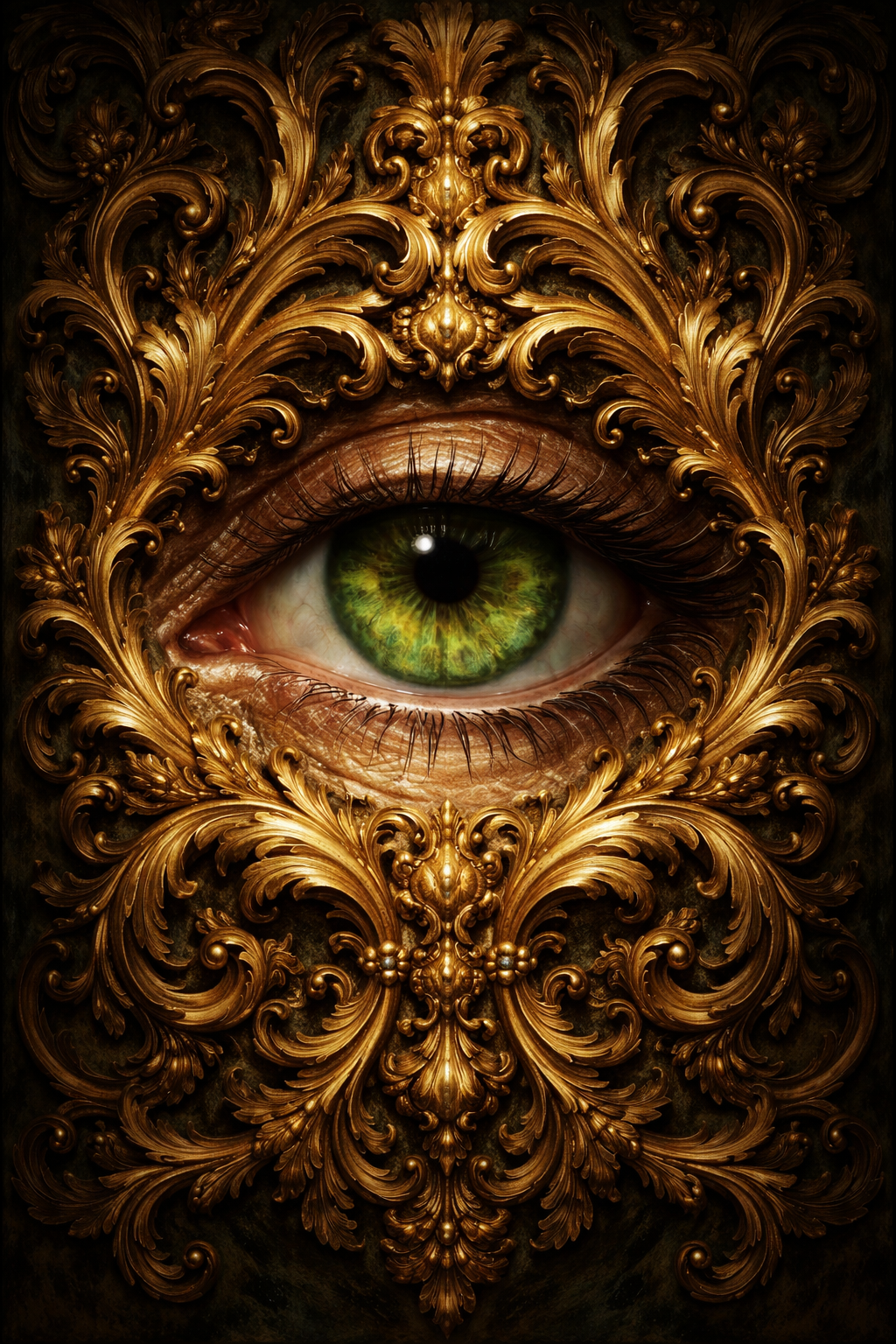
What is the point of a custodial system without a discerning eye at its helm?