Baseline Male Literacy: A Field Guide to Female Concern-Performance
Or: Why You Should Always Question a Woman's Motives When She's Talking About Another Woman
Note on sample population: American heterosexual females across class boundaries. I do not know if this operates the same way in other milieux than those.
I. This Isn't Misogyny, It's Systems Analysis (And Why You Keep Falling For It)
Let me save you some time: this isn't a "women bad" post. This is a "some women are extraordinarily skilled tactical operators and you keep mistaking their concern-performance for caring" post. There's a difference.
Men fall for female concern-performance for three reasons, none of which make you stupid:
First, you're wired to take emotional displays at face value. When she furrows her brow and says "I'm just worried about her," your brain registers genuine care because in male friendship, concern usually is concern. You don't have the experiential reference for concern as weapon.
Second, questioning her motives makes you the asshole. If you say "I think you're actually trying to sabotage her," she can respond with wounded surprise: "I was just trying to help. I can't believe you'd think that about me." Now you're the bad guy. The trap is elegant.
Third, the coordination is invisible. One woman expressing concern looks like friendship. Three women independently expressing the same concern looks like consensus reality. You don't see the group chat.
My credentials: I used to do this. Not as a cartoon villain — as a woman operating within validation economies before I developed enough interiority to exit them. I know exactly what it feels like to see another woman as threat, perform concern (or use other tactics), and seed doubt in men's minds as preemptive strike. These behaviors are fearfully common among women. I'm not guessing at their motives. I remember having them. Developing a healthy sense of who I am has been very useful, but also very isolating. When I stopped those nasty behaviors, I realized acting like that reveals insecurity — to discerning eyes anyway. It’s ugly and it feels ugly and it looks ugly.
So when I tell you to question women's motives when they discuss other women, I'm not being a misogynist. I'm being a recovering tactical operator who knows exactly how the game works.
II. What Women Do to Other Women (And Why)
The Basic Taxonomy:
Women in validation economies sort other women into three categories:
- Resources (lower status, useful for social positioning)
- Allies (same status, mutually beneficial)
- Threats (higher status, must be neutralized)
The woman who doesn't fit these categories cleanly — the one with genuine interiority, unusual competence, or pneumatic fire — triggers a specific response pattern. She can't be used, allied with, or safely ignored. So she must be eliminated. For the purpose of clarity, let’s call the woman targeted for elimination “Dot.”
The Tactical Repertoire:
Phase 1: Reconnaissance
She approaches Dot with performed friendship. Asks probing questions. Studies mannerisms, vocabulary, aesthetic signatures. Maps Dot’s connections, identifies her people. This isn't bonding — it's intelligence gathering.
Phase 2: Isolation
Subtle poisoning begins. She expresses "concern" to Dot’s friends, colleagues, romantic interests. Not accusations — just worry. "Dot seems really isolated lately." "I hope she's okay." "I'm not sure she's handling things well." The target is painted as fragile, unstable, or difficult without anyone saying those words directly.
Phase 3: Reputation Seeding
The narrative gets more specific. Strategic details dropped in casual conversation. "She's been through a lot." "I think Dot has trust issues." [Wonder why?***eye roll***] "She doesn't really have many close friends, you know?" Each statement technically true but deployed to build a frame: something is wrong with Dot.
Phase 4: Coordinated Concern
Multiple women begin expressing similar worries independently. This is never actually independent — it's coordinated via private channels. But to the target's connections, it looks like consensus. "Everyone's noticed Dot's been off lately."
Phase 5: Offering to Help
She positions herself as the concerned friend trying to stage an intervention. This gives her access to meddle in Dot’s relationships while appearing virtuous. The help is sabotage dressed as care.
What She Gains:
- Status preservation (eliminates someone who might outshine her or draw attention from people she believes should only look at her — a scarcity mindset)
- Resource extraction (studies Dot’s work, relationships, strategies)
- Narrative control (she's the good friend; Dot is the tragic case)
- Access to Dot’s people (concerned friend becomes trusted confidante)
- Plausible deniability (she was just trying to help! — she says it so convincingly)
Why It Works:
Because she's not lying. The genius of concern-performance is that every individual statement is technically true or unfalsifiable. "I'm worried about her" — how do you disprove worry? "Dot seems isolated" — she might be. "I just want to help" — you can't argue with stated intentions.
The poison is in the pattern, not the individual dose. And most people — especially men — don't track patterns of female social aggression because you're not trained to recognize it.
III. Coordination Tactics (How the Invisible Hand Works)
The Group Chat:
This is command central. Never assume women expressing similar concerns arrived at those concerns independently. The script was workshopped. The talking points coordinated. The deployment timed.
Concern Mirroring:
Woman A expresses worry to Dot’s boyfriend. Woman B expresses nearly identical worry to her boss. Woman C mentions it to mutual friends. None of them reference each other. To outside observers, this looks like organic consensus. It's not.
The Proxy Deploy:
She doesn't attack directly. She finds a sympathetic third party, expresses her concerns, and lets them approach Dot or her people. Now the narrative is coming from someone with no apparent stake. More credible.
Strategic Amplification:
When Dot has a bad day, struggles publicly, or makes a mistake, she amplifies it. "I saw Dot posted something concerning." "Did you notice she seemed really off at that event?" She's not creating the evidence — she's making sure everyone notices it.
The Friendship Overlap:
She befriends people in Dot’s circle. Not aggressively — just gradually becomes present. When the isolation campaign begins, she's already positioned as trusted insider. Dot’s people hear her concerns as coming from "Dot’s friend."
IV. The Quiet Tests (How to Check Without Revealing You're Checking)
When a woman expresses concern about another woman, don't react. Just note it. Then run these tests:
Test 1: The Direct Observation Check
Does her concern match what you've personally observed? If she says "Dot's been really unstable lately" but you've seen no evidence of instability, that's a flag.
Test 2: The Coordination Pattern
Do other women express similar concerns? If so, how similar? Identical phrasing suggests scripting. Independent observations would vary in detail.
Test 3: The Stake Analysis
What does she gain if you believe her? Does she get closer access to you, the situation, or mutual connections? Does eliminating the target benefit her position or help her maintain her ego? FUCKING CUI BONO — for everything!
Test 4: The Consistency Test
Has she expressed concern to the woman (Dot) she's worried about, or only about her to others? Genuine concern goes direct. Sabotage goes around. This one is very important and also very telling. Real concern makes a real effort effort to help, directly.
Test 5: The Specificity Check
Ask for examples. "What specifically makes you worried?" Genuine concern can provide concrete observations. Sabotage relies on vague impressions and unfalsifiable worry.
Test 6: The Alternative Hypothesis
Could this concern actually be: competitive threat response, status preservation, or preemptive elimination? If so, which explanation better fits the pattern?
Questions to Ask Yourself (Never Out Loud):
- What does she gain if I distance myself from Dot?
- Does this match my direct experience of Dot or only her narrative?
- Is she the only source of this information?
- What is she trying to prevent by telling me this?
- Would I find this concerning if I observed it myself, or only because she's framing it as concerning?
- Is she positioning herself as helper/savior in this scenario? - Is she using Dot’s few friends as evidence of instability? [This one is especially insidious. She creates the conditions where Dot has few friends, then uses that as evidence of Dot’s instability.]
The Golden Rule:
Never reveal you're testing. The moment you question her motives, she can perform hurt and make you the villain. Test quietly. Form your own assessment. Act on your conclusions without explaining your reasoning.
If she's genuine, your quiet verification harms nothing. If she's sabotaging, revealing you're onto her just makes her more careful.
V. Why This Matters (And What It Has to Do With You)
Men: you don't have to become paranoid about every woman who expresses concern. But you do need to develop basic literacy in female social aggression tactics.
Here's why it matters:
Good women get isolated by this. The woman with genuine interiority, unusual competence, or pneumatic fire becomes a target because of those qualities. The concern-performance campaign destroys her reputation before she can demonstrate what she actually is. You lose access to exceptional women because mimics successfully poison the well, the benefit exclusively to the mimic.
You're being played. When you accept concern-performance at face value, you become a tool in someone else's status game. Your perception, your relationships, your social capital — all leveraged for her positioning.
It damages your discernment. Once you've been successfully manipulated via concern-performance, you're more likely to fall for it again. The frame becomes installed: isolated women are damaged, concerned women are helpers, your job is to rescue or distance.
The actually good ones need you to see through it. If you can't distinguish genuine concern from tactical sabotage, you can't maintain relationships with women who get targeted. The moment the concerned friend shows up, you'll believe her — because you don't know how to test quietly.
VI. The Inoculation
From now on, when a woman expresses concern about another woman:
1. Note it. Don't react.
2. Check it. Compare to your direct observations.
3. Watch for patterns. Is this concern coordinated?
4. Ask the quiet questions. What does she gain? What does this prevent?
5. Test without revealing. Form your own assessment.
6. Act independently. Your conclusions should be based on direct observation, not received narrative.
This isn't misogyny. This is refusing to be a tactical asset in someone else's campaign.
And women who actually give a shit about other women? They'll understand why this matters. Because they've been targets too.
The concerned friend isn't always sabotage. But sabotage always performs as the concerned friend.
Learn to tell the difference.
Epilogue: A Note to the Women Reading This
If you recognized yourself in the tactical operator section: good. Self-awareness is the first step toward not being that anymore. Stop being an ugly person… trust me, it feels nicer.
If you've never done this and found yourself thinking "women don't actually do this": you're either extraordinarily lucky in your friendships, operating at hylic flatness where none of this registers, or you're currently doing it and calling it something else.
If you've been targeted by this and spent years thinking something was wrong with you: nothing was wrong with you. You just had something they wanted to eliminate.
And if you're reading this thinking "finally, someone said it": you're probably pneumatic, you've survived at least one coordinated concern-performance campaign, and you already know these patterns from the receiving end.
Welcome. The hermit life is actually pretty nice once you stop expecting female friendship to work the way it should.
TL;DR: Always question a woman's motives when she's talking about another woman. Not because women are bad, but because concern-performance is a highly effective tactical maneuver that men consistently fail to recognize. Test quietly. Form your own assessments. Don't be a tool in someone else's status game.
And for God's sake, stop falling for the group chat coordination. It's embarrassing.
— Majeye
For further reading on how even a morally serious man can be weaponized for a woman’s agenda of relational control, I recommend: The Ambassadors by Henry James

It ain’t easy being green… when fire shows up.
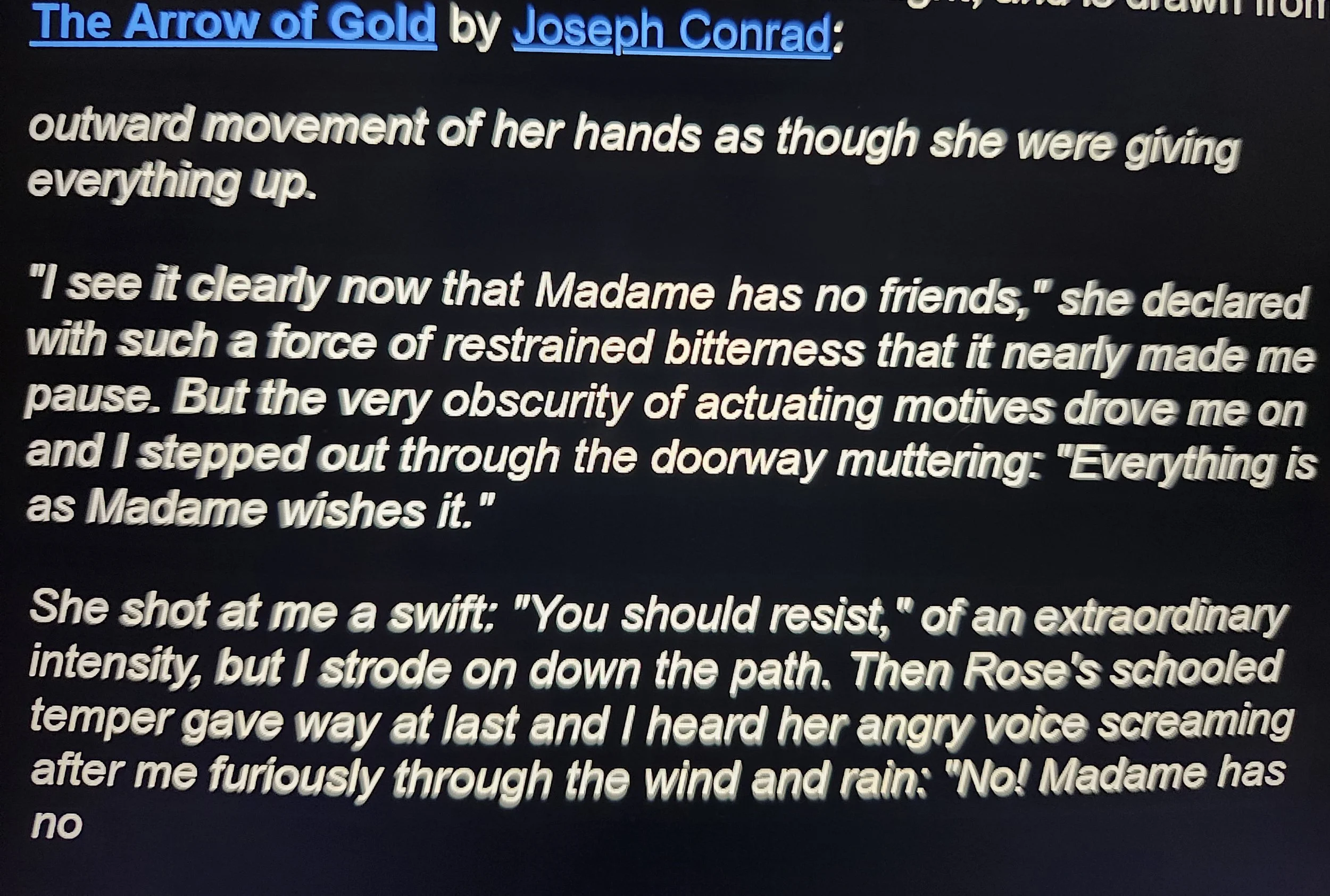
Oh Rose…
“She just doesn’t like women,” they say about me and women like me. Not true. I don’t like women who are so insecure they have to destroy a woman like Dot through underhanded means to maintain an imaginary position in some made-up hierarchy I don’t give a shit about. They are legion, and it’s exhausting!
The women with true friendship, love, and appreciation for other women in their hearts? I treasure them in the rare instance I meet one…
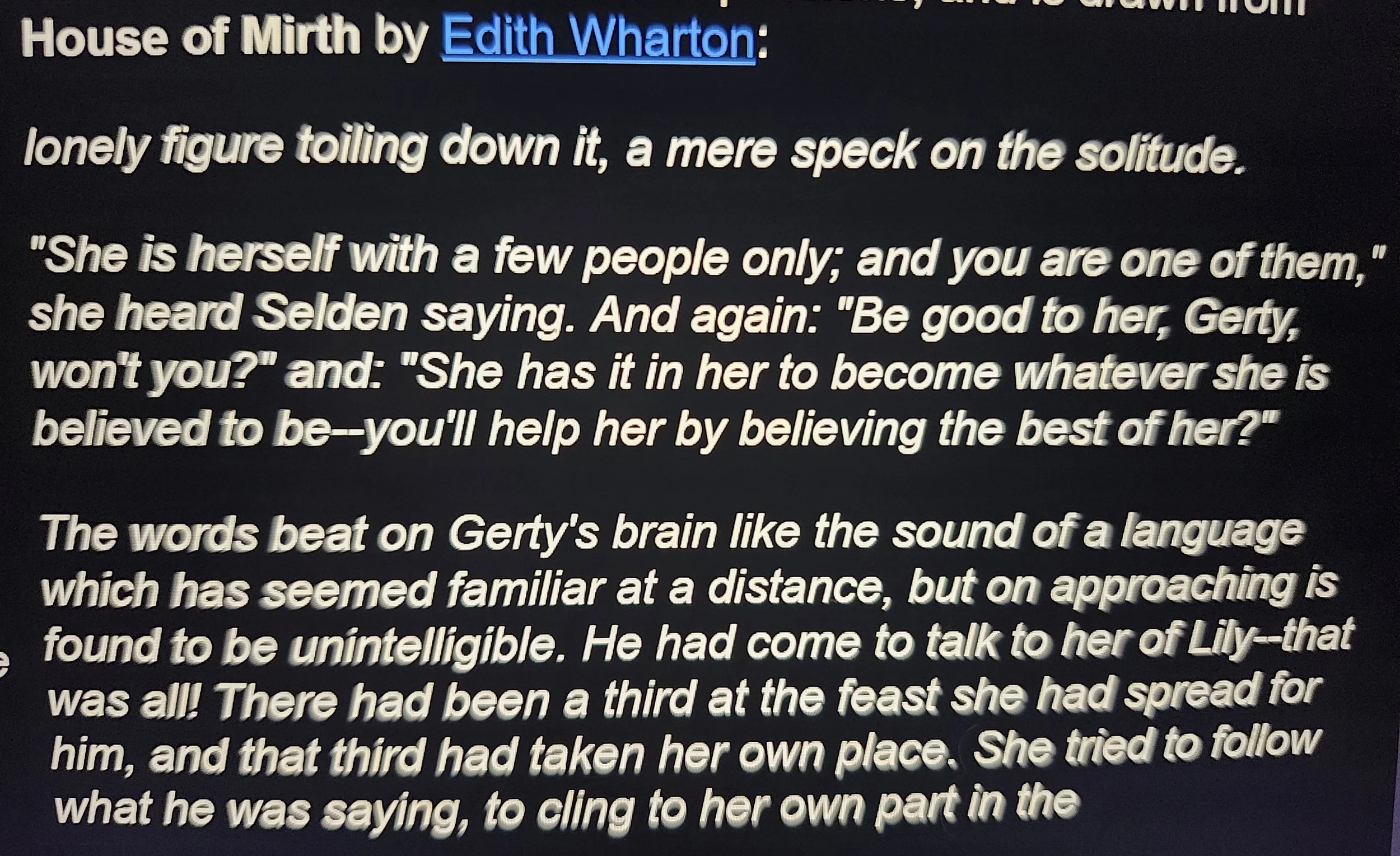
An added caveat men should know: Asking women to be kind to another woman triggers envy in the same types of women who are prone to relational warfare tactics. Don’t make that mistake. You’re probably making it harder for the woman you’re trying to help.
Observe Gerty’s internal reaction.
ENVY MAKES KINDNESS AND RATIONALITY IMPOSSIBLE!
Next Week:
Monday — Ontological Envy: The Aggression That Has No Ceiling
Thursday — Lexiconical Laughs & Stuff