Why I Don’t Use Citations
THE CREDENTIALING PERFORMANCE
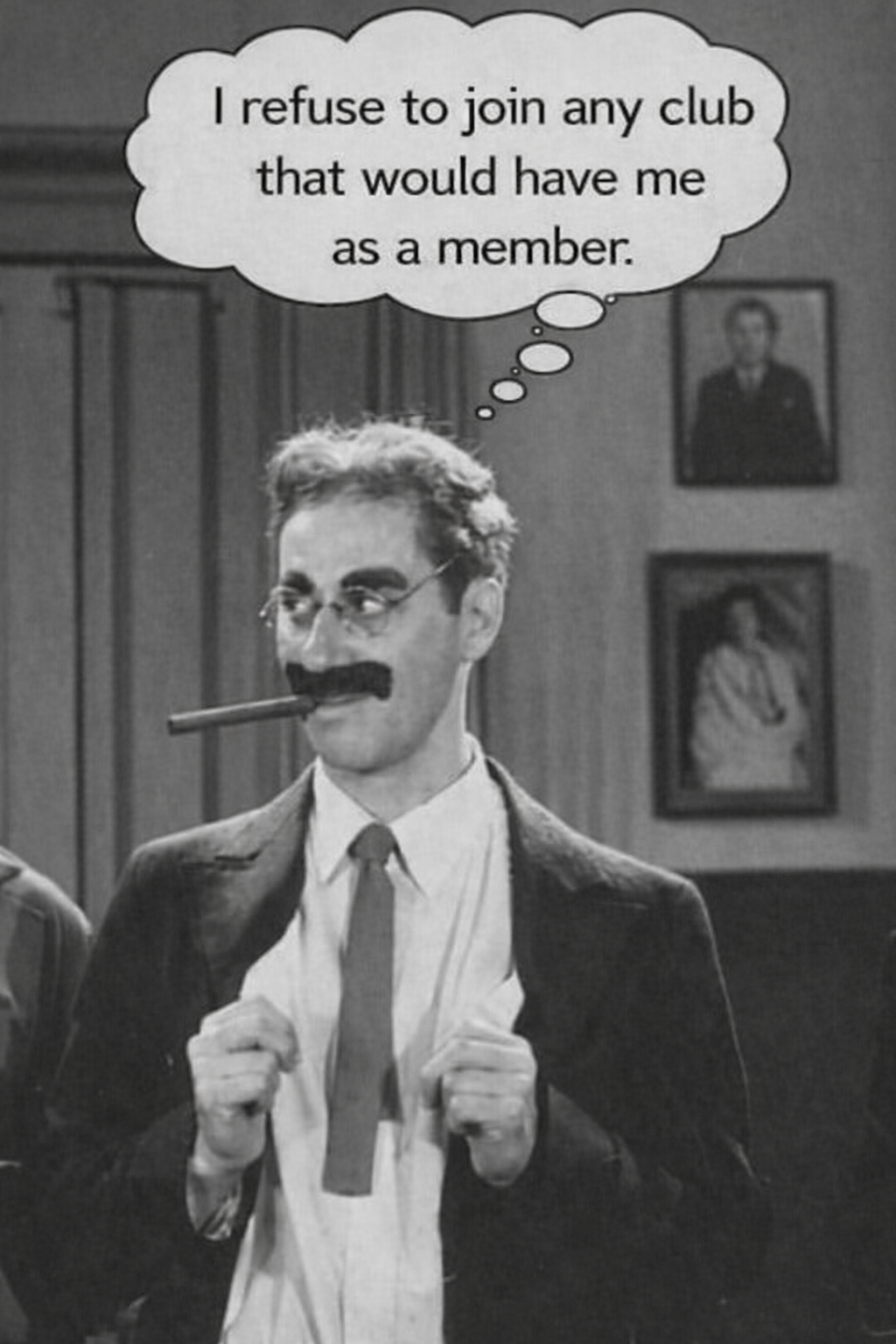
I don't use citations for the same reason I don't display follower counts: both are proof-of-membership tokens in systems I declined to join. The citation apparatus exists to render ideas legible to gatekeepers, not to make those ideas true. It's a credentialing performance dressed as intellectual rigor—a way of signaling that you've paid your dues to the hierarchy and can be trusted not to destabilize it.
Watch how it works: institutions cite institutions citing institutions, the network feeding itself in a closed loop of mutual validation. Your idea doesn't exist—cannot exist—until it's been blessed by someone who was themselves blessed by someone else, in an unbroken chain of apostolic succession stretching back to some founding text everyone references and no one reads. The game isn't about demonstrating that you've thought; it's about demonstrating that you've read the approved literature and can perform the correct genuflections. The citation becomes the idea's passport, proof that it emerged from sanctioned territory rather than from the stateless hinterlands where I work.
What citations actually signal is this: I am not a threat to the existing order. I have placed myself within the genealogy you recognize. I will not burn your house down. And I've never been interested in that particular bargain.
THE INSTITUTION AS CARICATURE
There was a time when universities functioned as knowledge factories. That time has passed. What remains are credentialing factories, institutions optimized for their own perpetuation rather than the production of genuine understanding. The apparatus still wears the costume of rigor—the peer review, the footnotes, the mortarboard—but the substance beneath it has hollowed out, and what you're left with is caricature: the performance of intellectual seriousness by people who've forgotten what the original looked like.
Consider the peer review system, that supposed gold standard of academic legitimacy. What it actually is: ontological envy institutionalized. Original thought filtered by committees of people who didn't think it first, who have every incentive to protect the paradigm that credentialed them, and who mistake their failure to understand for your failure to be correct. The system doesn't reward insight; it rewards citation density and methodological compliance. Publish or perish has produced exactly what you'd expect: volume over substance, a deluge of papers that cite each other in ever-tightening spirals while adding nothing new to the sum of human understanding.
And then came the replication crisis—the moment the apparatus convicted itself. The literature turned out to be wrong at scale. Studies couldn't be reproduced. Entire fields were built on findings that evaporated under scrutiny. And the citation network, that supposedly self-correcting mechanism, had faithfully reproduced the error, amplifying it with each new reference until the whole structure was a cathedral built on sand. The institution didn't catch the problem; it was the problem, so busy credentialing itself that it forgot to check whether any of it was true.
I'm not interested in paying tribute to a caricature.
WHERE FRAMEWORKS ACTUALLY COME FROM
There's a difference between synthesizing existing thought and originating new observation. The literature can teach you what other people saw from where they were standing. It cannot teach you what you see from inside a phenomenon they never inhabited. Direct experience is an epistemological source the citation apparatus doesn't know how to process, because it requires you to trust your own perception more than you trust the approved genealogy—and that's the one heresy the institution cannot forgive.
Every framework I work with—reverse solipsism, cognitive sovereignty, ontological envy, horizontal totalitarianism, death glamour, mimic theory—arrived whole, not from reading alone but from the collision of lived experience and genuine contemplation. These aren't wholly derivable from the existing literature because the existing literature wasn't looking from this angle. The cosmological architecture I operate within was built from interior pressure, not received tradition. It was recognized, the way you recognize a face you've been drawing in the dark, not constructed from citational Lego blocks someone else manufactured.
And here's the risk no one mentions: read too much and other people's frameworks colonize your perception before your own can form. You start seeing the world through their categories, their questions, their approved angles of approach. The hermetic advantage—thinking developed outside the network—is that it remains unpredictable, uncontained, and irreducible to "basically a combination of X and Y." If one more person tells me my work sounds like some recombinant derivative of thinkers they've memorized, I will scream. Being able to reference people from the past does not make you intelligent. All it means is that you are incapable of viewing someone's work on its own terms without genuflecting to your own mental trophy case, mistaking your citational reflex for discernment.
There is nothing wrong with thinking for yourself. There is nothing wrong with coining your own terms for phenomena you have actually thought about, lived through, and understood from a position no one else occupied. The network would prefer you didn't—original perception is always a threat to established order—but that's the network's problem, not mine.
INTELLECTUAL SOVEREIGNTY AS METHOD
Sovereignty, properly defined, is the right to arrive at conclusions through your own process without submitting them to institutional approval first. The citation requirement functions as a border crossing: show your papers or you don't enter legitimate discourse. It's a toll booth on the road to being taken seriously, and the toll is this—acknowledge that every idea you have is downstream of someone the institution has already blessed, or admit you're an intellectual vagrant with no pedigree to vouch for you.
What gets lost in this arrangement is precisely the genuinely new. Original perception has no lineage to cite because it didn't come from the literature—it came from lived experience, from occupying a position no prior framework anticipated. The citation apparatus cannot process this. It mistakes absence of ancestry for absence of rigor, when in fact the two have nothing to do with each other. Influence is real, inevitable, and doesn't require footnotes. You absorb what you read, it shapes your thinking, and that's fine—but citation is something else entirely. Citation is the performance of intellectual debt, the ritual acknowledgment that you are downstream, subsidiary, derived. It's the genuflection that says I know my place.
I don't know my place, and I'm not interested in learning it. I read widely without becoming beholden. I know the literature without needing its permission. Sovereignty doesn't mean ignorance—it means the conclusions are mine, arrived at by my own method, tested against reality rather than against the preferences of a committee. The internal measurement standard is simple: does the framework correctly predict and describe observed reality? Does it hold under pressure? Does it illuminate what was previously opaque? That's the only citation that matters—reality itself, which has no institutional affiliation and doesn't care whether you've footnoted it properly.
My work is answerable to that, and to nothing else.
WHAT THE INSTITUTIONS FEAR
Original frameworks that arrive from outside the network cannot be easily absorbed, disputed, or defused using the network's own tools. This is what the institutions actually fear—not that uncredentialed thought might be wrong, but that it might be right in ways the approved channels never anticipated. The academy's response to this has been consistent across centuries: ignore it until you can't, ridicule it while you can, absorb and repackage it once it becomes too visible to dismiss. What they will never do is engage it on its own terms, because engaging it on its own terms would require admitting the terms themselves didn't require institutional permission to be valid.
This is ontological envy at institutional scale. A framework that didn't pass through the approved channels is an implicit accusation that the channels aren't necessary—that reality can be observed, understood, and articulated by someone who never paid the toll. The gatekeeping function is protective, not epistemic. It exists to protect the hierarchy from being restructured by thought it didn't produce, to ensure that all legitimacy flows through the credentialing apparatus and nowhere else. The institution isn't guarding the integrity of knowledge; it's guarding its own position as the sole authorized distributor of what counts as knowledge.
The problem—and this is where it all starts to fall apart—is that institutions have confused the map for the territory for so long they've forgotten territory exists independently of maps. They've been citing each other in closed loops for decades, building elaborate structures of reference that pointed only to other references, and somewhere along the way they stopped checking whether any of it matched the world outside the citation network. The replication crisis was simply reality forcing the issue: the literature was wrong at scale, and the network kept citing anyway, because citation was never about truth. It was about maintaining the network.
I don't need the network's tools to dismantle the network. Reality does that work for free.
THE READER WHO DOESN'T NEED THE FOOTNOTES
The post-institutional reader has already been burned by fraudulent credentialing and is now assessing ideas on their own terms. This reader doesn't care where the framework came from—only whether it correctly describes observed reality. Recognition, not validation, is the operating principle: the framework either names something you've experienced or it doesn't. No footnote changes that calculation. No citation makes a false claim true or a true claim false. The coming recognition economy restores what the citation apparatus tried to obscure: the primacy of original observation over network membership.
A framework that arrives from direct experience and names something correctly will be recognized by anyone who has had that experience. No institutional imprimatur required. The phenomenology of ontological envy [post next week about this concept] doesn't need a reference list to be real—you either know exactly what I mean because you've watched it operate, or you don't. The absence of citations becomes its own signal in this environment: this thought arrived from somewhere else, outside the approved channels, which is exactly where interesting thought has always come from. Copernicus didn't cite his way to heliocentrism. Darwin didn't footnote his way to natural selection. Original perception arrives whole, from direct observation, and the literature catches up later—or it doesn't.
This is written for the reader who already knows the institution is a caricature and has been waiting for someone to write from entirely outside its walls. You recognize the costume of rigor performed by people who've forgotten what rigor actually feels like. You've watched the citation network reproduce its own errors at scale and call it peer review. You're done mistaking credentials for competence, references for thought, and the performance of intellectual debt for actual understanding.
So here's the final provocation: if the framework is wrong, demonstrate it by engaging the argument. Show me where the observation fails to match reality. Prove the theory doesn't hold under pressure. But don't demand the footnotes. The footnotes are border-crossing papers for a country I'm not trying to enter, and if you need them to take an idea seriously, you've already told me everything I need to know about whether you're capable of thinking outside the approved channels.
Reality doesn't require citations. It simply is, indifferent to whether you've properly acknowledged its lineage. My work answers to that standard and no other—and if you've been operating by the same principle, watching the institutional caricature from outside its walls and waiting for someone to name what you've been seeing, then you already know exactly why the footnotes were never necessary in the first place.
— Majeye

Oh Rupert! This party is fabulous. Do you think everyone can see how smart we are?
Why of course, Bitsie! It’s practically written all over us.