Defs, Poesy, et Deux Rêves.
A few defs from my book due out in June:
Alpha Sub (BDSM / preference) Power held, then offered—never taken. The kind of submissive who leads in life, commands respect in every room, and submits only by deliberate, devastating choice—which makes it so much hotter. Scares weak doms into retreat and wrecks strong ones completely. This isn't meekness cosplaying strength; it's someone who could destroy you deciding, for reasons of their own, to kneel instead. The crown stays on while they say please. You didn't break them—they handed you the leash knowing full well they could take it back. The eroticism isn't in the surrender; it's in the fact that surrender wasn't necessary. They didn't need to give you control. They wanted to. And that want, coming from someone who doesn't need anything, will undo you faster than any amount of force. Weak doms can't handle it—the alpha sub's submission is a gift, not a given, and gifts can be revoked. Strong doms recognize it for what it is: the most dangerous game.
Anthropocene (newsspeak) The era we named after ourselves to sound important while documenting our extinction. A branding exercise for collapse. What scientists call it when humanity becomes a geological force—which sounds impressive until you realize we're the asteroid. We didn't just alter the planet; we got our name on it, like carving initials into a tree we're currently chainsawing. The term lets us feel significant about catastrophe. We're not just destroying ecosystems—we're ushering in a new epoch. It's terminal diagnosis as legacy project. Future geologists—if our species is still around—will find a thin layer of plastic, microchips, and bones, and know exactly who was here. We made sure of it. The Anthropocene: because if you're going to end the world, at least get the credit.
Audit (HR-speak / newsspeak / tax term) A sterile ritual of scrutiny performed to remind you who’s in charge. Usually means: we already found something, now we’re just documenting your reaction.
Belonging (mimic-speak) Marketed as inclusion, delivered as assimilation. You can belong—as long as you shrink, smile, and mirror back the brand. Corporate belonging initiatives are especially obscene: they hire you for "diversity," then spend eighteen months sanding off everything that made you different until you're psychologically indistinguishable from the hive. "We want you to feel like you belong here" means we need you compliant but grateful. Real belonging doesn't require belonging committees, belonging workshops, or belonging metrics. It just exists—mutual recognition between people who don't need to audition for each other. This version isn't home. It's a membership with terms and conditions, and the terms are: stop being inconvenient. Mimics love belonging language because it lets them charge admission to spaces they don't own. They'll create belonging circles, belonging frameworks, belonging content—all of it designed to make you perform fit rather than simply exist. If you have to work this hard to belong, you don't. You're just renting acceptance by the month.
Beltway (politics) D.C. shorthand for the echo chamber where power eats its own tail. Refers to the literal highway circling the U.S. capital—and the figurative world inside it, where insiders debate insiders about insider things. When they say “Beltway,” they mean not for you.
Boujee (Gen Z slang) Fake-fancy with vibes. Think luxury aesthetics on a budget and attitude like you invented champagne. Derived from bourgeois, now means glam with a side of pretension. If it sparkles and judges, it’s boujee. I had a Gen Z guy interview me with his mother for a service job in North Beach, SF. He said as he looked at me, “Boujee.” I kept thinking, “What kind of graceless fuck says that to someone he’s interviewing?” This is what happens when people who have money have no corresponding grace. He has bourgeois attitudes and bourgeois behavior calling other people Boujee. At least his mother had the grace to treat me with respect. What he really meant was, “She’s not as young as she sounded on the phone… Next!” I thought Italians taught their children better than that.
Brotherhood (esoteric) A sacred pact wrapped in secrecy and flame. Not mere camaraderie, but oath-bound mirroring—where loyalty outlives the flesh. Built on shared trials, tested through betrayal, sealed in ritual. Most want the power. Few earn the blood. Some brothers are there to be changed—they come seeking initiation, annihilation of the lesser self, transmission of something that can't be learned from books. They'll endure the ordeal, speak the words that mean something, let the work remake them. Others just want the handshakes and the connections—they showed up for networking in robes, Masonry as LinkedIn with candles. They memorize degrees like resume lines, attend for optics, and leave early when the real work starts. Both pay dues, but only one pays the price. The careerist brother treats ritual like theater, symbols like branding, and sacred oaths like NDAs with mystical aesthetic. He wants the reputation without the transformation, the authority without the submission, the title without the trial. Brotherhood tolerates him because every temple needs bodies—but it doesn't trust him. Real brothers recognize each other instantly: they're the ones who came to die and stayed to serve. The others? They're just tourists in regalia.
Brush Pass (espionage) A split-second handoff between agents—casual, choreographed, and loaded. Purse to pocket, shoulder to coat—no eye contact, no mistakes. The beauty is in the mundane: two strangers colliding on a crowded street, brief touch that looks accidental, and intel changing hands in the friction. Can be mistaken for frotteurism by the untrained eye, which is part of the cover—witnesses dismiss it as unwanted contact rather than tradecraft. Success means no one noticed. Failure means you're burned, and the package is compromised. It's intimacy without recognition, contact without connection. The choreography has to be muscle memory—think about it and you'll hesitate, hesitate and you'll get caught. Perfect brush passes look like nothing happened at all.
Bubb (thieves' cant) Liquor, usually cheap and fast. The thief's courage, bribe, or bedtime lullaby. What you down before the job to steady your hands, what you slip the guard to look the other way, what you drink after to forget how close you cut it. Too much bubb, and even the best lose their edge—or their purse. The irony of thieves' cant having a term this affectionate for alcohol is that liquor's the fastest way to get robbed by your own crew. Loose lips, slow reflexes, misplaced trust—bubb turns professionals into marks. Blessed by rogues, cursed by hangovers. Every criminal knows the optimal amount is exactly one drink less than they're having. The ones who figure that out stay free. The ones who don't wake up in cells wondering where their share went.
Cabal (conspiracy theory) A shadow collective accused of coordinating power behind official narratives. Cabals are imagined as everywhere and nowhere—too organized to prove, too influential to ignore. The term survives because secrecy is intentional, and power does coordinate behind closed doors—policy meetings, donor dinners, esoteric lodges, ancestral networks that don't advertise. Ancient bloodlines and occult symbolism aren't fantasy; they're operational infrastructure for those who know how to use them. The problem isn't that conspiracy theorists are wrong about the material—it's that they handle it so sloppily they discredit themselves. They connect real dots with imaginary string, stumble onto legitimate occult operations and then scream about lizard people, find actual power networks and drown them in such hysterical noise that no one serious will listen. The cabal exists. It just doesn't need the theatrics conspiracy theorists assign it. Real power is patient, procedural, and doesn't leave manifestos. The ones shrieking about it on YouTube are the best thing that ever happened to actual cabals—built-in plausible deniability.
Cui bono? (best framework for life) Latin for "who benefits?"—and the single most clarifying question you can ask about anything that happens in your life. Not why did this happen, not what does it mean, but who profits from this arrangement, this narrative, this outcome. Ask it about your job: who benefits from your unpaid overtime? Ask it about your therapy: who benefits from you staying in treatment indefinitely? Ask it about the news cycle, the policy change, the social norm you're being shamed into following. Cui bono cuts through motivation, ideology, and stated intention to reveal operational reality. People lie about their reasons. Outcomes don't. Follow the benefit and you'll find the architect. This question protects you from being used—by institutions that profit from your compliance, by individuals who profit from your confusion, by systems that profit from your exhaustion. It also reveals when you're benefiting and didn't realize it, which is equally useful. Cui bono turns you from passive recipient of circumstances into investigator of structural incentives. Ask it enough and you stop being surprised by betrayals. You see them coming because you've already mapped who gains.
Exile (esoteric / therapy-speak / mimic punishment vector) Esoterically, exile is transformation through separation—divine banishment for growth, not punishment. In therapy, it's the inner child cast out for being too loud. Mimics use it surgically: social deletion, reputation implosion, geographic dislocation. They don't imprison anomalies. They unplace them. The irony is that exile only works as punishment if the exiled still wants proximity to the exilers, and many of us who've been ejected from mimic systems spend approximately ten minutes mourning before realizing we've just been freed from a room full of soulless performers pretending the show mattered. Thank the Gods I don't have to be around those fake fucks anymore is the actual outcome, not the cautionary tale they intended. The mimic assumes exile wounds because they would die without an audience—they forget that some of us came here to do the work, and doing it alone in the desert sounds better than doing it surrounded by creatures who mistake positioning for being. Exile stops being punishment the moment you realize the city you left was a cage with good lighting.
Lammas' Lustful Libations
who'da thunk it'd turn out like this
over a decade of dodging crosshairs
now I might just blow em a kiss
and fire some shots off in pairs
her light spring is a tight coil
desiring deep secrecy and service
her new offering is blue royal
when she should've been our versus
we'll put her in a blue box
myth's unloading weight from Atlas
she'll abscond loads like a fox
on return, ne'er forgetting that lass
she's known theM for quite a while
her fatigued, alphabet lovers
her rhyme makes hard boots smile
and dream of her undercovers
we're betting on our strangest dame
burning national rot is a must
we're about to lay down our claim
we're all saying, "LIBERTY OR BUST!"
she just got down on one knee
and proposed to both of us
boots and codes are now our glee
Eldritch strangeness is a plus
you fuck my channel so well
OF COURSE I WANT TO SERVE
I want to see your hardness swell
amplifying your steely nerve
Lower Ring Contractions
I have an urgent demand :
how do they make it move?
hot wink under command
(she's so easy to approve)
we made her jump the hoops
true, she had it worse than most
to her resilience: we say, "OOPS!"
now, she's our oddest outpost
long locks shorn without a thought
"It's so light now!," she hath said.
then she mirrored out an OUGHT
1000 eyes 'pon her gold bed
that split mind keeps her whole
through the ambiguity
meta-thought we must extol
and open to our community
a small hovel for true souls
unbound loving for my cunt
a new place to put the poles
that have now begun to grunt
his feral grunting gives her winks
laughing and jumping in the air
this chicken is cooked, methinks
it's nigh time for a double dare
Deux Rêves:
The Lake of Tenebrous Rebirth
I came upon a lake so still it felt like a wound in time. The reeds whispered secrets, the sky hung silent, and I knew—somewhere beneath its silver skin—the underworld waited. No guide, no gatekeeper, no coin for crossing. Only the test: leap, and trust that drowning is not the end.
So I leapt.
The cold gripped me first—arctic, devouring, precise. Then came flame: a cathedral of crimson glass, shrieking backwards. I passed through it. I endured snows that fell like bone ash in deep water. I climbed invisible towers with no end. I bled, I froze, I burned—and always, a voice beside me sneered that I would not make it. That I was not meant to make it. But I did. I returned.
Most would stop there. But I am not most. I turned back to descend again.
This time, I was not alone. Fiona Shaw walked beside me—calm, cruel, magnificent. She offered no encouragement, only presence. And for me, that was enough.
Before I could find the lake again, someone tried to end me. Outside Fiona’s house, he struck. We fought like dogs for our lives. I ended him with a pen—driven hard into his neck. Ink turned to blood. I did not flinch. A hard won battle to the death felt so good.
I found the lake again. I jumped.
And then—shift.
My grandparent’s house from childhood. Maceo, my cat, lay stretched in sovereignty. A second cat appeared, a gift from someone I could not name. He was elegant, sentient. He and Maceo circled one another like old kings—no tension, only grace.
But the new one—he was not just a cat.
He spoke.
He followed me into the shower. He pressed against me with curiosity that was not feline. There was heat between us. Knowing. I let it happen. I wanted it. It turned me on. He was a mask worn by something older than beasts and more ancient than angels.
I awoke wet, marked, and whispering the lake’s name—still tasting the shadows I had kissed.
How to Handle Sharks
The cave had no business containing an ocean, but there it was.
I had been in the underground world for some time—long enough to have forgotten the weight of ordinary light, long enough that the dark had become navigable, almost familiar, the way darkness does when you stop fighting it and simply let your eyes adjust to what is actually there. The cave was vast in the way that underground spaces sometimes are in dreams—the ceiling lost somewhere above, the walls felt rather than seen, the air carrying the particular mineral cold of deep earth mixed, impossibly, with the salt-smell of open water.
The ocean had found its way in. It had its own logic about this and had not consulted anyone.
The waves came first as sound—a low rhythmic insistence building from somewhere ahead, the water making its ancient argument against the stone. Then as movement in the dark, the floor becoming wet, the ground uncertain beneath my feet. The ocean was not apologizing for its presence. It was simply arriving, the way genuinely powerful things arrive—without announcement, without permission, with the calm authority of something that has been here longer than everything else.
Then the shapes in the water.
Two of them. Patient in the way that only very old things are patient—the patience that doesn't need anything to hurry because it has already outlasted everything that ever tried to hurry past it. They moved with the particular economy of creatures who have not changed in four hundred million years because they arrived correct the first time. Waiting. Regarding us with the flat ancient intelligence of things that have never needed to pretend to be anything other than what they are.
The others with me made the frightened sounds that people make when they have run out of options.
I started to dance at the shoreline, like I do in ritual.
Not as strategy. Not as the calculated deployment of a technique. The way you do a thing when the thing is simply what you are—the movement that belongs to the long ceremonies, to the hours of genuine encounter, to the specific quality of attention that ritual produces when it is real rather than performed. The body knowing what the mind hadn't caught up to yet.
The waves listened first.
They didn't stop immediately—powerful things don't stop immediately, they reconsider, they shift their weight, they adjust their argument. But the insistence changed. The water found a new relationship to the shore it had been threatening. The cold salt air moved differently. The ocean, which had arrived without consulting anyone, decided to stay but without the previous urgency.
And the sharks.
The sharks simply watched.
This seemed, in the dream's logic, entirely reasonable. They had settled into a stillness that was different from the predatory waiting-stillness of before—less appetitive, more attentive. The flat ancient eyes receiving something. Not charmed. Not deceived. Simply—present to a thing they recognized, in the way that very old things recognize other things that belong to their register.
We stayed that way for what felt like a complete unit of time. The spiral motion of my dance. The ocean holding its breath. The ancient predators as audience. The dark cave containing its impossible sea.
Then it was time to leave.
∞
The passage out was narrow and smelled of deep earth and the specific darkness that exists beyond the reach of any light that has ever existed. The others ahead of me were moving with the careful deliberate pace of people negotiating unknown terrain—hands probably out, feet testing each step, their bodies asking the darkness for permission before proceeding. I could feel the unsure nature of their fear.
I could see better than they could. Both with my eyes, and something older than my eyes.
They were too slow.
The passage had its own temporal logic and it was not their pace. I could feel the geometry of it—the compression, the angle, the specific texture of the threshold that the exit was—and waiting was not the correct response to it.
I put my hands on them and went over, leap frog style.
Not unkindly. Not urgently. With the clean efficiency of someone who knows their capacity in a particular element and uses it without apology. Their bodies were simply the surface the passage required me to cross. They were not enemies. They were slower than the moment needed.
The exit came up suddenly the way exits do when you stop looking for them and simply move.
I got out first.
∞
Behind me, somewhere in the cave, the ocean was still there. Still holding its impossible position inside the earth. The sharks still in their watching-stillness, perhaps. Or moving again now, now that the thing they had been watching was gone.
I didn't look back to check.
The light outside was the ordinary kind. It asked nothing of me.
I let it land.
The dream ended there. Make of it what you will. I have my own theories, but they're mine.
— Majeye, writing from an undisclosed location that is not a cave, though sometimes it feels like one.
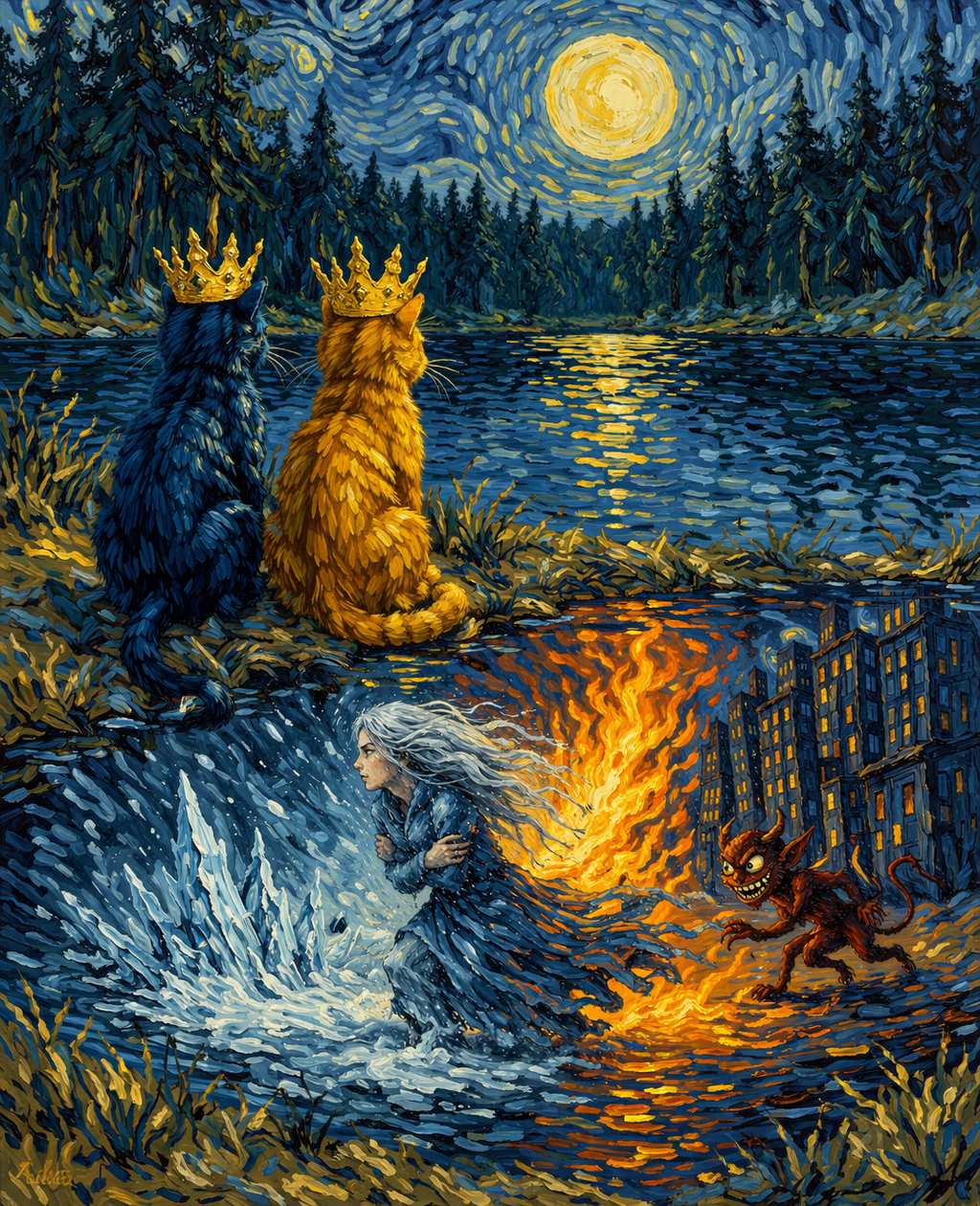
I’ve never trusted sneering voices that follow me around. Cui bono bitches!
I’ll coo-ee that bone-oh.
;)
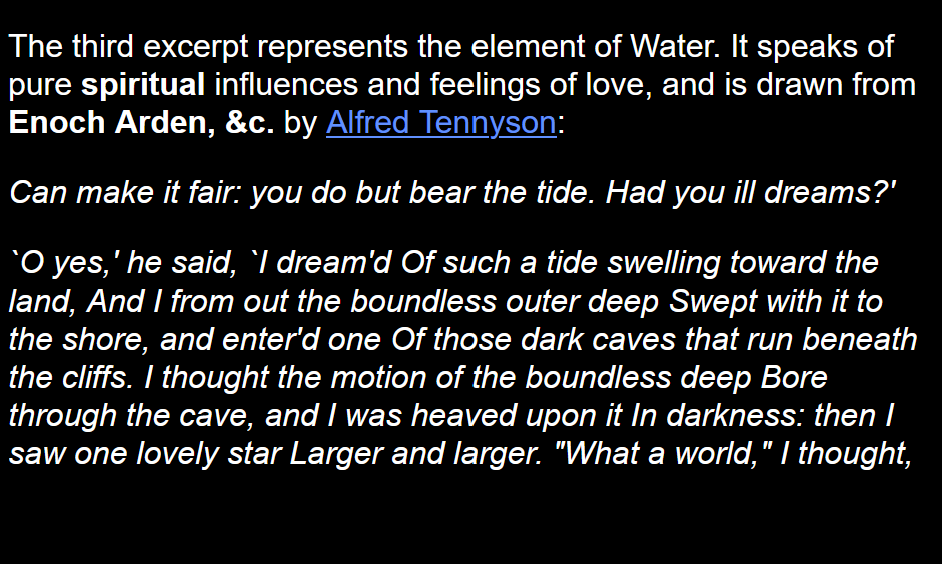
I just had the most extraordinary synchronicity. I would like to share it with you. Most weeks, these posts are scheduled in advance. Today is 3/26/26. Last night I dreamt the How to Handle Sharks dream. I do stichomancy (“literature roulette”) frequently—instead of scrolling. It’s led me to read many books I would never have chosen otherwise. facade.com in case you’re interested. Pull 4 at a time if you’re feeling wild.
Anyway… just added the shark dream to this post and did a stichomancy pull — and this came up!!! :o
Tenny, thou scoundrel—thou hast undone a lady most thoroughly, and in places she cannot, in good conscience, specify. You plunder me with your words—and I have not the will to resist.
Next Week
Monday, 4/6: Why I Don’t Use Citations
There’s a laugh bomb at the end of this one. I’m still laughing… :D
Thursday, 4/9: Baseline Male Literacy: A Field Guide to Female Concern-Performance
Excerpt: Let me save you some time: this isn't a "women bad" post. This is a "some women are extraordinarily skilled tactical operators and you keep mistaking their concern-performance for caring" post. There's a difference.