Why Cleverness Is the Cubic Zirconia of Intelligence
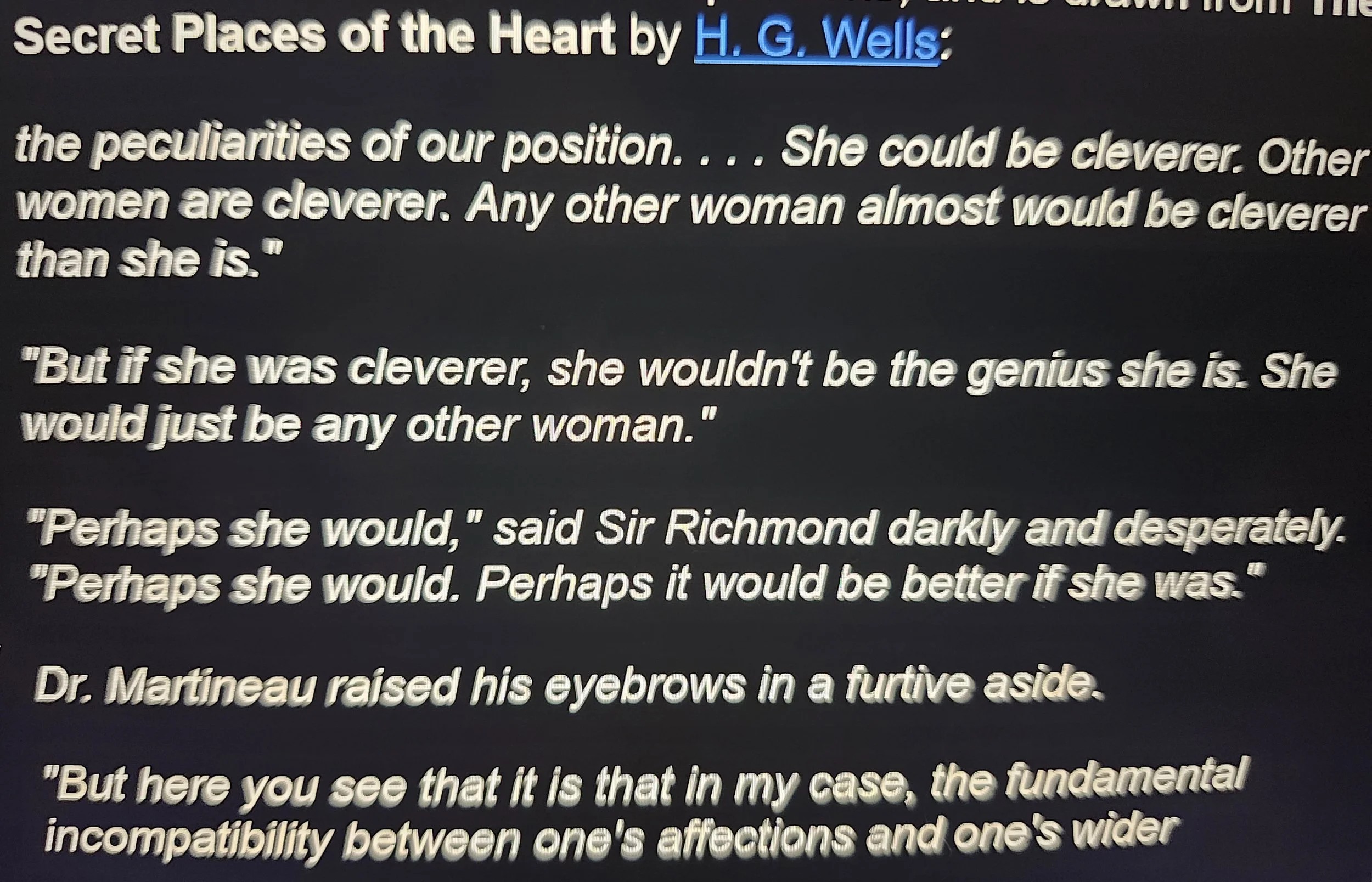
Sorry for the blurriness… I’ll get the hang of it one day. :)
I. The Taxonomy: What We're Actually Dealing With Here
Let's be precise about what we're measuring. Cleverness is the ability to operate within an existing system with exceptional facility — a navigation skill, not a generative one. It's the art of finding every loophole, optimizing every variable, exploiting every angle the structure permits. Intelligence, by contrast — the native kind, the kind that actually matters — is the capacity to perceive the system as an object and ask questions it cannot generate about itself. This is the crucial distinction, and it's not subtle once you see it: cleverness is lateral, moving swiftly across the surface of the game, while genius is vertical, perceiving the game from a position outside it entirely.
Cleverness is fundamentally reactive. It needs a structure to be clever within; remove the game board and it goes quiet in a particular way, like a champion debater handed a blank page instead of a resolution. Genius, on the other hand, is generative — it produces things that cannot be fully predicted from their inputs, which happens to be the actual definition of original thought. So why do we confuse them so reliably? Because the clever person has learned to produce the surface signatures of intelligence fast enough that most rooms never check what's underneath. They've mastered the performance: the quick wit, the apt reference, the elegant reframe. It's the difference between a library and a laboratory — one retrieves, one discovers. And like cubic zirconia versus diamond, cleverness is identical to the real thing under casual inspection. Both sparkle prettily in the light. But apply pressure — the kind that comes from genuine intellectual stakes, from problems that have no established solution set — and only one of them holds. Genius, like diamond, was formed under pressure. Cleverness just mimics the shine.
II. The Clever Person's Greatest Hits (A Lovingly Documented Catalog of Their Moves)
I've been watching this performance for years, and I have to say — it's exquisite. The clever person has moves, real moves, polished to a gleam. There's the name-drop with calibrated critical distance, never fully endorsing, never fully dismissing, always performing nuance like a tightrope walk they've rehearsed in the mirror. There's the pivot: when content runs dry, question the question; reframe the frame; make the meta-move. Watch how smoothly they transition from point to point, no productive gaps, no wrong turns — none of the intellectual stammering that marks someone actually thinking rather than retrieving. The eyebrow raise gets deployed at precisely the right moment, learned from watching people who actually had something to raise an eyebrow about. Citation functions as costume, the approved references worn as proof of arrival, proof they belong in the room.
And oh, they know which rooms to enter and exactly what to say in them. The tells, though — the tells are delicious if you know where to look. Ask something the literature doesn't cover and watch the retrieve function return null, watch them stall in a way that's qualitatively different from uncertainty. The secondary tell: they are never wrong in interesting ways. Their errors are evasions, not genuine miscalculations, smooth deflections rather than the spectacular face-plants that come from someone actually reaching past what they know. Because cleverness is essentially parasitic — it requires the host structure, cannot generate its own oxygen. The clever person can model the genius well enough to circulate as one in most environments, and here's the thing: most environments are not checking. Most rooms reward the performance. So why wouldn't they keep running it?
III. The Genius's Deeply Inconvenient Personality Defects (Which Are Actually the Whole Point)
Now let me speak tenderly of the genuinely intelligent, bless their deeply unmarketable hearts. They're weird in ways that don't perform well — thoughts arriving with the wrong shape because they came from somewhere unapproved, somewhere the literature hasn't mapped yet. They will sacrifice the room for the idea every single time, because the idea is more real to them than the room's approval of it, which makes them terrible at parties and invaluable everywhere else. They often can't fully explain how they got there; the process is genuinely internal and not entirely reconstructible even to themselves, which is maddening if you're trying to grade them on showed work but is actually the signature of something real happening.
They'll go somewhere uncomfortable and stay there past the point of social grace, poking at it, worrying it, refusing to let it resolve prettily. They can be wrong in illuminating ways that reveal actual architecture — which, perversely, is often more threatening to a room than being right in all the approved ways. They do not know when to stop, which is both the defect and the engine, the thing that makes them exhausting and the thing that makes them capable of what they're capable of. The gaps, the roughness, the occasional incoherence — these aren't bugs. They're evidence of genuine process rather than retrieval, the intellectual equivalent of watching someone actually make something instead of just unwrapping it.
And here's where it gets truly funny: they're often indifferent to the scoreboard in a way the clever read as incompetence and cannot compute as sovereign. They're frequently mistaken for difficult, obtuse, or insufficiently rigorous by people optimized for smoothness. Because if you've spent your whole life getting very good at the game, someone who finds the game absurd and refuses to play looks like they're losing.
IV. The Gender Costume Ball: How This Presents Differently When Chromosomes Are Involved
Let's talk about how this plays out when you add gender to the mix, because oh, does it ever play differently.
The clever man finds the hierarchy fast, learns its signals, rises efficiently. He's read the right things, drops the right names, has opinions that sound like vision if you're not listening too closely. He's confident, well-cited, mildly insufferable at dinner, the kind of guy who pivots from Foucault to founder mode without breaking a sweat. He'll tell you about the limits of empiricism while checking his phone. Institutions love him. He looks exactly like what they think intelligence looks like, and he got very good at looking like that on purpose.
The genius man is frequently underestimated early, often called difficult or impractical, the weirdo in the corner who won't shut up about his theory until suddenly it turns out he was right and the institution doesn't know what to do with him. By then he's already burned the building down. Think of every ahead-of-his-time type who got dismissed as a crank until he wasn't — your Teslas, your van Goghs, your difficult brilliant men the world finally caught up to. Sir Richmond, bless him.
The clever woman — oh, she's the most dangerous mimic in the ecosystem. She has learned to perform intelligence so fluently she circulates as the real thing in virtually every room. She knows which thinkers to name-drop and when, when to be incisive, when to defer, how to oscillate between positions in a way that reads as nuanced thinking. It is not. It's a retrieve function dressed in Céline and good taste. She'll tell you she's "thinking through" something when what she means is she's waiting to see which way the room tilts. She's mastered the eyebrow raise, the thoughtful pause, the self-deprecating aside that signals she's in on the joke. And why shouldn't she? It works. The performance gets her everything the real thing would, without the inconvenience of actually having to generate novel thought.
The genius woman is weird in specifically female-coded ways that get her dismissed rather than celebrated. Too much, too intense, too unwilling to sand the edges down to something the room can comfortably digest. She doesn't play the game and gets read as not knowing the rules, when really she just finds the rules boring compared to what she's actually trying to do. What the clever woman spends considerable energy performing — the brilliance, the edge, the uncompromising vision — she simply is and cannot stop being, which makes her both magnificent and unmarketable.
Here's the genius woman's specific problem: she occupies no approved cultural slot. Too strange for the mainstream, too original for the academy, too sovereign for the people who would otherwise champion her. She makes people nervous in a way they can't quite articulate. The clever woman's specific advantage? She occupies the slot designated for the genius woman and furnishes it convincingly enough that no one audits the deed. She's moved into the house and everyone assumes she built it.
Why do men find the clever woman easier? She lets them feel clever by proximity. She's smart enough to spar with, not so smart she produces vertigo. The genius woman, by contrast, doesn't confirm what you already think — she reorganizes the ground you're standing on, and most people experience that as hostility. Which is why the genius woman so often reads as a limitation to people who only know how to reward the performance. They think she doesn't know how to play. She knows. She just has better things to do.
V. Please Stop Asking Her to Be More Clever: A Formal Objection
Here's what I need you to understand: the request to be more clever is the request to hollow out in the right places and fill the holes with approved material. It's asking someone to trade what they are for what circulates more smoothly. And look — cleverness is learnable. Any sufficiently motivated person with access to the approved literature and reasonable social intelligence can master the moves. There's a whole industry built around teaching it. Genius is not learnable, cannot be taught, arrives unbidden or not at all. So when you wish a genius were cleverer, what you're actually wishing is that she were someone else entirely and considerably less interesting.
If she were cleverer she would just be any other woman — the irreplaceability and the impossibility are the same thing, two sides of the same maddening coin. The smoothness people want when they ask for more cleverness is the smoothness of the retrieval function. They're asking for a library when they have a laboratory and don't recognize what they're looking at. They want the performance: the clean transitions, the apt references, the ability to make everyone in the room feel smart. What they don't realize is that genius optimized for social approval becomes clever — and this is not an upgrade. This is a species loss.
Because here's what gets lost when the genius learns to perform: the gaps, the productive wrongness, the genuine arrival at things from unexpected angles. All the evidence of real process, all the marks of someone actually making thought rather than retrieving it — sanded away in the name of palatability. And for what? The clever are a dime a dozen. We are drowning in them. Every conference, every faculty lounge, every Serious Publication is stuffed to the gills with people who learned the moves and execute them beautifully. There is no shortage.
There is a shortage of the other thing. Suggesting it should become more like the abundant thing is an error of the first order, like asking the last of a species to please be more like the invasive one that's everywhere. No. Absolutely not. I refuse the premise.
VI. The Field Test: How to Tell What You're Actually Looking At
Alright, you want to know what you're dealing with? I have tests. Delightful, devastating little tests that separate the wheat from the extremely well-branded chaff.
The edge-of-map test: Take the conversation somewhere the literature doesn't cover, some genuinely uncharted territory where there are no approved takes to retrieve. The clever go quiet or pivot immediately to safer ground. The intelligent lean in — this is where it gets interesting for them, where they actually have to think instead of recall.
The error test: How do they respond to being wrong? The clever evade, smooth over, reframe so subtly you barely notice they never actually acknowledged the error. The genuinely intelligent find the wrongness interesting and follow it like a thread, because errors reveal structure and structure is what they're actually after.
The novel situation test: Remove the game board entirely. New problem, no established solution set, no clear signals about what the room values. The clever are immediately disoriented, scanning for cues, trying to figure out what performance is expected. The intelligent generate their own orientation and get to work.
The original term test: Do they coin their own vocabulary for phenomena they've actually thought about, or do they always reach for someone else's framework? Coinage requires having perceived something that doesn't have a name yet. Retrieval requires only having read about it. Listen for whether they're speaking their own language or fluently citing everyone else's.
The meta-move test: When cornered, does the argument fold back into questioning the question, interrogating the frame, making the clever pivot to higher ground? The meta-move is the cleverness escape hatch, deployed when content runs out. Genuine thinkers go through the problem, not around it, even when it's uncomfortable.
The enthusiasm tell: What are they actually excited about? The clever are excited about being seen as smart — watch how their energy tracks the room's recognition. The intelligent are excited about the thing itself and occasionally forget to perform the excitement correctly, get weird and intense about something no one else cares about yet.
The patience test: Sit with them in genuine uncertainty. No answer available, no approved framework applying, just the discomfort of not knowing. The clever become visibly uncomfortable, start reaching for something, anything to resolve it. The intelligent become interested. This is their natural habitat.
The clink test: Are they congratulating each other or actually talking? Clever people recognize each other instantly and spend a lot of time confirming they're both very smart. Intelligent people often don't notice they're supposed to be performing mutual recognition because they're too busy with the actual conversation.
Run these tests. You'll know what you're looking at within ten minutes. I promise you — the difference is not subtle once you know where to look.
VII. In Closing: A Plea for Better Taste
So here's my ask, modest as it is: stop rewarding the performance and start recognizing the thing itself. The clever are everywhere, polished and pleasant and utterly interchangeable. They've learned to sparkle on command. Fine. Let them. But when you encounter the real article — rough-edged, inconvenient, occasionally wrong in ways that teach you something — for the love of everything holy, don't ask it to file itself down into something smoother. The cubic zirconias are a dime a dozen and getting cheaper by the semester. Learn to recognize a diamond when it cuts you.
Wickedly and monstrously yours,
Majeye
A quick word about this song… It’s not for everyone. It’s one my ritual dancing songs. I don’t claim a specific genre of music as identity. No typecasting please. I like all music that moves the spirit and have favorites across eras and genres. This song belongs to a newer genre called PHONK — kind of rap, edm, and goth in one. It’s short; the lyrics are apropos to the post, as usual. “Tired of pussy-motherfuckers always talkin’ reckless.” Take it or leave it. :)

Smash it and see what stays hard…
;)
Next Week
Monday - 4/27: The Borg Standard: HOW MIMIC CULTURE ASSIMILATES EVERYTHING INTO ONE SIGNAL
Thursday - 4/30: Applause for the Dead: The Cultural Logic of Celebrating the Pneumatic Type While Eliminating the Pneumatic Person
Yeah, T.S. Eliot is awesome… No doubt.
I like to rhyme my poetry. Feels right. Dunno why. If only it didn't annoy me so much, to be sent to read poetry I've already read — by a deus ex machina of all things…
To the ghost: I recommend Hafiz, with wine…
Or (with good gin) Lewis Carroll’s Phantasmagoria for some truly excellent, insane, and whimsical rhyming poetry. Every time I read Carroll’s poetry I giggle at his word mastery, and then I think of that scene in Wayne’s World where Wayne and Garth meet Alice Cooper — “WE’RE NOT WORTHY! WE’RE NOT WORTHY!”
Short clip of Wayne’s World scene: