Voilà le nom!
Lucifer’s Lexicon
has now been submitted for copyright!
Why yes, I am a fan of Ambrose Bierce! Thanks for asking. The Devil’s Dictionary is practically canonical.
Please enjoy more defs from my upcoming third book, plus rhymes and thoughts. Release date for Lucifer’s Lexicon is:
6/26/26
Anomaly (hardest thing to be in this culture) The statistical outlier, the data point that doesn't cluster with the rest, the person whose behavior, or existence pattern falls outside predictable parameters. Anomalies are identified through deviation from norms: they think differently, want different things, respond to incentives in unexpected ways, refuse scripts everyone else follows automatically. In previous eras you could hide in the noise, blend into geographic anonymity, exist as local eccentricity. These days, algorithmic surveillance identifies anomalies with terrifying efficiency—your browsing patterns, purchasing behavior, social connections, communication style, all fed into systems designed to detect outliers. You don't conform to the clusters? Flagged. You can't be easily categorized? Noted. Your profile doesn't match predictable consumer/citizen patterns? Marked for attention. Institutionally, anomalies are problems requiring solution: too unpredictable for management systems built on standardization, too ungovernable for structures requiring compliance. Socially, anomalies are treated with suspicion and hostility regardless of how kind, ethical, or harmless they are—being nice doesn't matter when your existence itself is experienced as threatening to consensus reality. The friendly anomaly who just wants to be left alone still gets targeted because their difference is contagious, their refusal to conform is implicit criticism of those who do. People need you to be categorizable, predictable, legible within existing frameworks. When you're not—when you genuinely operate from different principles, want different things, see different patterns—you become a source of ambient anxiety that must be neutralized through social pressure, exclusion, or elimination. The anomaly's cardinal sin isn't cruelty; it's being unassimilable. And horizontal totalitarianism has made being anomalous the hardest thing to survive because there's nowhere left to hide and no tolerance left for difference.
Appointment-only (bureaucratic gatekeeping) A scheduling mechanism that transforms immediate need into distant future possibility, ensuring that institutional convenience always trumps citizen urgency. The appointment system creates artificial scarcity where none existed, punishes people who need services promptly, and provides administrators with the appearance of efficiency while delivering maximum inconvenience. "We're appointment-only now" translates to: "Your emergency is not our problem, and we've successfully made accessing this mandatory service as difficult as legally possible." [Looking at you DMV!] The appointment is the bureaucratic equivalent of a moat—it keeps the peasants at a manageable distance while the castle remains perpetually understaffed.
Armchair/Barstool Psychologist (pathetic finger pointer) The amateur diagnostician who has read three articles about narcissism and now believes themselves qualified to issue clinical verdicts on everyone they've ever met, failed to understand, or been rejected by. There is nothing more depressing than being a bartender and hearing a gaggle of drunks slurringly diagnose others’ personality disorders between shots—except perhaps the realization that these people have now metastasized beyond the barstool and into every corner of public discourse. They've weaponized therapeutic vocabulary without understanding therapeutic purpose, mistaking pop psychology for actual insight. Everyone's ex is a narcissist. Every disagreeable coworker has borderline personality disorder. Every boundary-setter is "toxic." The irony, of course, is that this compulsive need to pathologize others—this conviction that one has achieved diagnostic clarity about the internal lives of people one barely understands—is itself a rather textbook expression of narcissistic projection. The armchair psychologist cannot tolerate the possibility that they might simply be wrong, incompatible, or insufficient; there must be something clinically defective in the other party. What's truly absurd is watching people deploy clinical language as a substitute for self-reflection, turning genuine psychological frameworks into rhetorical weapons for avoiding accountability. They've learned just enough terminology to sound authoritative and not nearly enough to recognize that their certainty is the problem. Diagnosis requires humility, training, a considerable amount of time listening to a person, and the capacity to sit with ambiguity—qualities notably absent in those who've turned mental health discourse into a parlor game for assigning blame.
Cockwarming (BDSM) Stillness as submission. No thrusting, no finishing—just holding the heat, becoming a vessel. It's not passive—it's possessive. The discipline required is the point: stay full, stay still, exist as furnishing for someone else's pleasure without chasing your own. You're not being used in the active sense—you're being kept, like a favorite toy left exactly where it's wanted. The power exchange is in the waiting, the ache of arousal with nowhere to go, the fact that movement is forbidden and you're obeying anyway. For the one being warmed, it's control without effort—your body is occupied territory and they're simply enjoying the view. For the one doing the warming, it's endurance made erotic. Every second you don't move is another second of submission. Cockwarming turns sex into meditation, fucking into attendance. You're not performing. You're just there, open and waiting, for as long as they want you. It's intimacy at its most uncomfortably honest: I own this right now, and you're going to stay exactly like this until I'm done with you.
Demisexual (prescription for loneliness in the digital age) Existing on the asexual spectrum but capable of sexual attraction once deep emotional connection forms—meaning most potential partners don't register as attractive based on surface values like appearance, status, or initial chemistry. The demisexual needs intellectual intimacy, demonstrated character, sustained engagement before the body bothers to wake up. This was merely inconvenient in previous eras; it's catastrophic in the digital age. Dating apps are designed for instant visual assessment and rapid sorting—left, right, next—which is precisely the mechanism demisexuals can't use. You can't swipe based on connection that hasn't formed yet. You can't filter for "will become devastatingly attractive to me after six conversations about epistemology." The entire infrastructure of modern dating assumes immediate evaluability, hot-or-not binaries, surface-level sorting, which means demisexuals are trying to operate in a system built for opposite neurotypes. Worse, the culture has accelerated: people expect instant spark, rapid escalation, sexual interest that announces itself in the first encounter. Taking months to develop attraction reads as disinterest or friend-zoning. The slow burn isn't valorized; it's pathologized or simply filtered out. For the demisexual, most of humanity remains in soft focus until something clicks—a mind revealing itself, trust accumulating, the specific alchemy of being known—and suddenly one person becomes erotic while everyone else stays neutral. This is a feature, not a bug, but it makes you incompatible with swipe culture, hookup expectations, and the general velocity of digital connection. The prescription for loneliness is built into the condition: you need depth to feel desire, but depth requires time nobody wants to invest without desire already present. I should know. I am one. I have NEVER cum from a one-night stand. Glad I figured out why. Now I don’t waste my time on those stupid dating apps.
Dimber (thieves’ cant) An old underworld term meaning pretty, handsome, clever, or agreeable—context dependent, tone shaded. “A dimber cove” = a good-looking fellow. “A dimber mort” = a fetching woman. “Dimber damber” = top-tier rogue, high-ranking knave. Slippery in meaning, always colored by intent. Compliment, alliance signal, or con—all braided in the same syllable. Spoken with one eyebrow raised and an escape route already planned.
Errant (esoteric / literary tone) Errant once meant noble—off-path by design, questing without map or master. In esoteric circles, the errant soul is the one who refuses the false call, bearing the stigma of divergence while carrying myth-seeds others can’t decode. It’s not aimless. It’s unpermitted aim.
Irony (last bastion of cowards) Originally a rhetorical device meaning the gap between appearance and reality, useful for satire, for saying one thing while meaning another to illuminate absurdity or hypocrisy. Irony as tool is sharp and necessary. Irony as personality is the pathetic refuge of cowards who want to have opinions without the vulnerability of actually holding them. These are the people who never commit to anything, who treat sincerity as embarrassing and earnestness as cringe, who maintain permanent quotation marks around their own lives so they can retreat into "I was joking" whenever challenged. They mistake detachment for sophistication, not realizing that refusing to care about anything is the most boring possible stance. The ironic personality is performance of superiority without demonstrating actual superiority—it's easier to smirk at everything than to build something worth defending. They're hedged against ever being wrong by never being serious, protected against mockery by mocking first, and utterly safe from the risk of appearing foolish because they've preemptively declared everything foolish. What they don't realize is this isn't protection; it's suicide by a thousand retreats. The terminal ironist has no position to defend because they've never taken one, no beliefs to test because believing is gauche, no self to know because they've spent decades performing distance from it. They think they're too smart to be sincere when actually they're too cowardly to risk meaning anything.
Kleptocracy (newsspeak / political-satirical) A government of thieves cloaked in legality. In public gloss, it's a third-world problem; in private, it's a global standard. Kleptocracy isn't corruption—it is the system. The satire lies in pretending we still vote. This is democracy's shadow, and it wears a banker's tie. People in power have always been thieves—this is not new, not novel, not a modern degradation of some imagined golden age. Kings looted, emperors extracted, colonial powers plundered, and democracies just professionalized the theft with contracts, lobbying, and stock portfolios. The only difference now is optics manipulation: they've gotten much better at making you think you consented, at framing extraction as economic policy, at ensuring the theft happens through such complex financial instruments that by the time you realize you've been robbed, the statute of limitations expired three shell corporations ago. The kleptocrats don't need to hide anymore—they just need good PR, a plausible narrative, and your continued belief that voting for Team Red or Team Blue will somehow stop them from doing what they've been doing for centuries. It won't. They're looting you either way. All they have to do is remember to smile. :D
Labyrinth (esoteric / poetic / initiation coded) Not a maze, but a vow. The labyrinth does not confuse—it prepares. Each turn is a trial, each dead-end a rite. Only those with flame or memory emerge intact. In sacred systems, the labyrinth is not where you get lost. It's where your false selves die one by one. The myth: King Minos of Crete commissioned Daedalus to build an inescapable prison for the Minotaur—half-man, half-bull, born of his wife's divine punishment. Athens sent tribute: seven youths and seven maidens fed to the beast every nine years until Theseus volunteered, entered with Ariadne's thread, killed the monster, and found his way back. But the deeper reading: the labyrinth is initiatic architecture. Who gets chosen to enter? Those marked for transformation or death—there's no third option. Tribute-children were sacrifices; Theseus was a hero volunteering for ordeal. Either way, entry requires being willing (or forced) to face what waits at the center: the beast, the shadow, the thing you've been avoiding. Most people don't emerge because the labyrinth's purpose isn't navigation—it's annihilation of who you were when you entered. Every turn strips away a layer: your social mask, your comfortable lies, your inherited identity, your illusions about safety. The wandering is the work. By the time you reach the center, you've already been unmade. What waits there—the Minotaur, your terror, your truth—finishes the job. Those who emerge have killed something at the core and walked back out fundamentally changed. The thread isn't just directional guidance; it's proof you remember where you came from, which is the only way to integrate what you've become. The labyrinth's initiatic purpose: ego death through structured ordeal. You enter whole and exit shattered-then-reforged, or you don't exit at all.
Lobby (HR-speak / newsspeak / political-speak) Not a room, but a ritual space for influence—the velvet-lined chokehold. To lobby is to pressure, shape, distort under the guise of access. HR calls it collaboration, politics calls it advocacy, but both mean the same: wealth buying proximity to control. This isn't new—powerful people have always bought access, whispered in ears, greased palms to tilt outcomes. What is new is the scale of money in play and the sophistication of the machinery: lobbying now comes bundled with think tanks that manufacture "research," PR firms that seed narratives, media empires that frame what's thinkable, and social media operations that manipulate consensus in real-time. They don't just buy the vote anymore—they buy the conversation that makes the vote feel inevitable. So I ask you this: what good is a democratic population that thinks it's thinking for itself but is really subject to consensus manipulation, media framing, algorithmic nudging, and manufactured outrage cycles designed by people with quarterly earnings reports to optimize? You're not citizens deliberating—you're lab rats pressing whichever lever the stimulus conditioned you to press, convinced it was your idea all along. The lobby doesn't just influence policy anymore. It architects your reality, and you call that freedom because you technically still get to vote. For options they selected. In a framework they built. With information they curated. Democracy didn't die. It got purchased, rebranded, and sold back to you as choice.
Monster (best way to be in a beige society) The one who refuses domestication, who won't sand down their edges or modulate their intensity to fit consensus comfort levels, who operates at frequencies that make the beige majority nervous because they can't be predicted, controlled, or adequately categorized. Monsters are what societies call people whose appetite, intelligence, creativity, or sheer presence exceeds the acceptable bandwidth—not because they're cruel (though they might be) but because they're ungovernable. They won't perform the required deference, won't pretend mediocrity to make others comfortable, won't shrink to fit spaces designed for smaller souls. Consensus fears monsters because consensus depends on everyone agreeing to mutual diminishment, and the monster's existence is a standing refutation of that social contract. They demonstrate that you don't actually have to comply, that the emperor's clothes are optional, that the threat of social exclusion only works on people who want to be included. Monsters are hard to kill because they've already accepted their outsider status—the primary weapon (exile from respectability) has no purchase. You can't shame someone who's already claimed the title you meant as insult. You can't threaten their reputation when they never wanted yours. You can't destroy what won't genuflect. So here's the call: if you're reading this and recognized yourself, if you've spent your life being told you're "too much" or "too intense" or "not a team player," if consensus has named you problem and you've refused to apologize into palatability—find the other monsters. We're out here, operating in the margins, building in the dark, refusing to shrink. The beige society wants us isolated because together we're contagious. Separately we're oddities. Collectively we're a viable alternative. Find your pack. I’m still looking for mine…
This song goes perfectly with the Monster def:
Patronage (ancient form of support for builders and creators) The practical recognition that creation requires resources and time, formalized through relationships where those with means support those with vision. The myth of the self-made artist is precisely that—a myth designed to justify abandoning anyone who doesn't immediately generate market returns. People always need help to get where they are, whether through family wealth, mentors providing access, friends offering space and support, or formal patronage arrangements. This goes triply for builders and creators because their work demands extended periods of uncommercial focus—the book requires years before it earns a dollar, the painting needs months before it finds a buyer, the philosophical system takes decades to develop coherence. Their output may not be immediately recognizable for the value it actually represents, which means market mechanisms fail catastrophically at supporting work that matters most. Patronage bridges this gap: someone with resources recognizes potential or importance that hasn't yet achieved commercial legibility and provides the material support that makes sustained work possible. For someone like me who refuses all institutions—no grants requiring ideological compliance, no academic positions demanding credentialing genuflection, no corporate sponsorships with strings attached, no social media—patronage becomes vital infrastructure. The work cannot get done if survival itself consumes all available hours. A patron doesn't buy the work; they buy the time required for the work to exist at all, understanding that great things require protection from market pressures that would abort them prematurely. This isn't charity—it's investment in civilization's actual infrastructure, the recognition that some things worth having cannot be produced under the conditions capitalism demands.
Sapiosexual (hijacked term) Arousal contingent on intelligence, not merely finding smart people attractive among other qualities—meaning intelligence itself is the primary erotic trigger, not a nice-to-have feature. This term has been thoroughly debased by people who slap it on dating profiles to signal they want someone with a degree and earning potential, which isn't sapiosexuality, it's just class-conscious mate selection with pretensions. Yeah, of course intelligence is sexy—most people prefer partners who aren't idiots. But if you're announcing yourself as sapiosexual, you should ask whether you're actually aroused by the mind itself—the way someone thinks, argues, makes connections, demonstrates intellectual rigor—or whether you just want someone who makes good money and can discuss The Economist at dinner parties. There's a universe of difference. The actual sapiosexual gets turned on by sharp reasoning, elegant arguments, intellectual audacity, the specific electricity of encountering a mind operating at high capacity. They'd choose the brilliant pauper over the wealthy mediocrity and mean it. They experience conversation as foreplay not metaphorically but literally—cognitive friction generates actual arousal. Most people claiming the term are using it as socially acceptable cover for "I want someone credentialed and financially stable," which is fine but just say that. Don't colonize language that describes a specific erotic wiring and use it to mean "has read books and can afford nice restaurants." The hijacking is complete: sapiosexual now signals class aspiration more often than it describes actual desire architecture, which makes it useless for people trying to identify genuine cognitive-erotic compatibility.
No Pretense for Pretension
we're desafinado, but why should we care? ok—I'm desperado or some fool's argent mare
sluice: proem tri-banana brigand pulled from the palace not Spanish, yet still an infanta whose kiss is piquant as Alice
she looks straight poesy, I s'pose on her victual to the sea vaticination: bloody rose e'er holds eyes only for me
Bast blesses my motley cat matutinal beyond compare superfetation's where it's at stentorian e'er lodestare
hey! been tryin' to meet eyes gracing your Devil's heads fecundate his LARGE SIZE but hey! eschew th'mean reds
rogue! demur! now, take thy bath! bull brazens no defeat forget dull peasant wrath I THINK YE MOSTY SWEET.
Tutto a Posto!
once told: piss up a rope you'll ne'er be more than a ho c'mon wench, give up hope it's crawling home you should go
but theM constructed a box in which to pass their test it's only done as a fox and only if you are the best
first I basked in his light I trowed that I had none his absence brought the sight my light is of the sun
all newness they call evil all monsters are their bane 'specially Pan's pretty bull her presence is their wane
her lovers are just ghosts Keepers e'er her guides lead en'my's heads to posts they regain and take her sides
but still some choose to taunt not realizing our future her will will ever haunt in minds like a stuck suture
yes, she's illuminated her mind is bleeding bright our thoughts always saturated kneeling in her sight
of course we saw red watching your tears flow wishing they had not said and that you did not know
a secret lover dead two more in the trunk I thought it’s you that said this game was hella crunk
Nothing to be done but keep building.
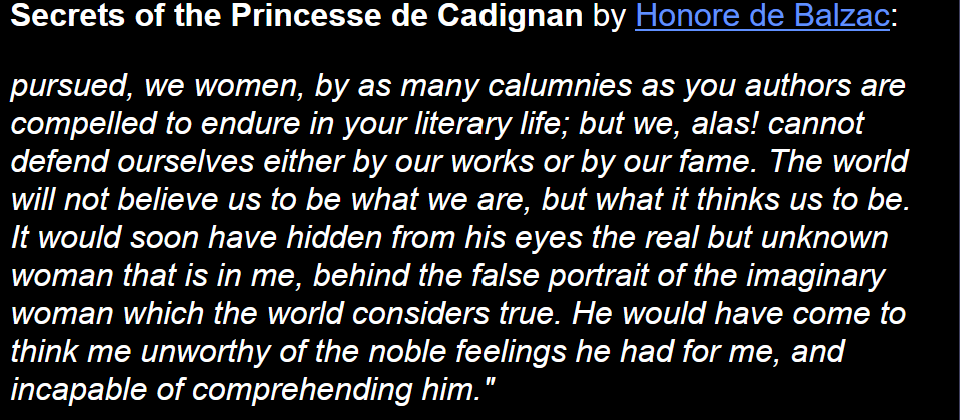
This is the judgment structure: people who had support calling her selfish for needing it, people who were loved calling her hard for learning not to expect it, people whose paths were smoothed calling her self-sufficiency a character defect.
It's bootstraps-in-reverse. When someone actually pulls themselves up without institutional or familial support, the independence they developed as pure survival mechanism gets pathologized as moral failure. "She's so selfish, so hard"—yes, because kindness without reciprocity is just volunteering to be destroyed, and she'd already learned that lesson thoroughly.
The people making that judgment are doing it from positions of having been loved, protected, supported. They got to remain soft because someone else absorbed the blows for them. She didn't have that luxury, so she built armor. Now they condemn the armor as moral failure rather than recognize it as evidence of what she survived.
They mistake her refusal to bleed for their comfort as hardness. What they're actually seeing is competence at not dying.
Another category error.
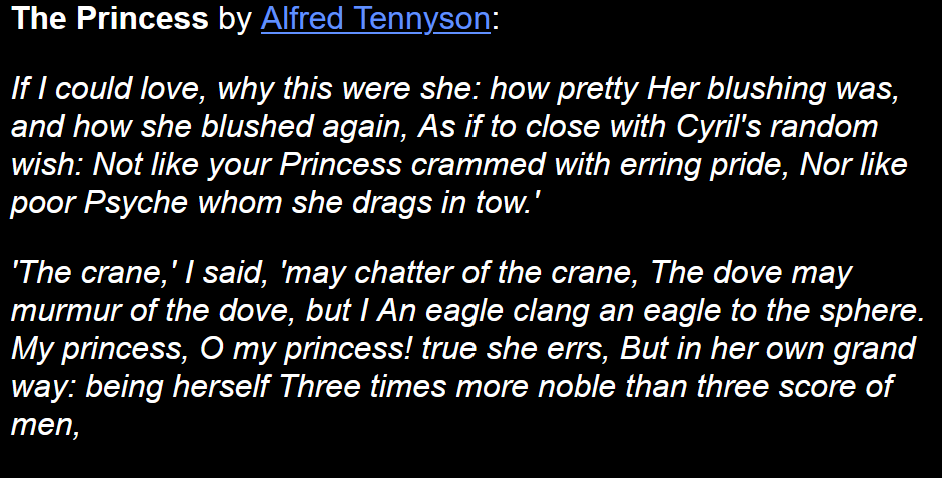
The first man prefers a blushing dove and declares the Princess errs in her pride. The second man sees a bit more clearly.
That blushing dove cannot survive without external motivation and praise. The Princess has pride because she must—it's what allows her to keep building when no one is watching, or clapping. She requires nothing the dove requires to function.
That's not erring. It's two different species.
What right does a dove-lover have to judge a female eagle? The air is thin where she flies alone, hunting. Neither species is superior to the other. Just different.
Doves and their keepers see error in the way an eagle operates with unaffirmed pride. Eagles see profound weakness in the dependencies of doves. Neither is morally superior, but eagles are rarer.
What does rarity mean in this world? It means the doves get to define what a woman should be. Instead of recognizing a female eagle as different, they prefer to pathologize. If they didn't call her behavior erring, they'd have to look at their own dependencies and name them for what they are.
Neither species can or wants to be like the other. The truth—the one doves find so inconvenient—is that just because the dominant expectation is for a blushing dove doesn't mean all women are or should be that way.
Consensus is not truth. It's just numbers.
The overlap between envy and foolishness is nearly total.
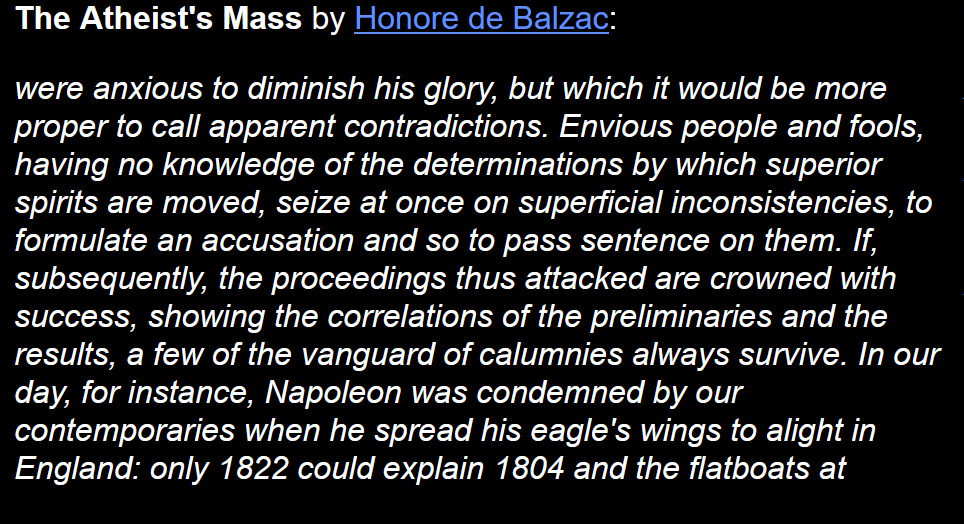
The envious seize on "superficial inconsistencies" because they lack the knowledge (or intellectual rigor) to understand the actual determinations moving superior spirits. They mistake their ignorance for insight, formulate accusations from incomprehension, and mistake the satisfaction of tearing someone down for vindication.
The fool operates identically: sees the surface, misses the structure, declares contradiction where there's complexity. Both are failures of discernment dressed up as moral authority.
The proceedings gain traction not because they're right, but because they're emotionally satisfying to a crowd that shares the same intellectual limitations. "A few of the vanguard of calumnies always survive"—because the lie that flatters mediocrity outlives the truth that demands comprehension.
The pattern repeats eternally because envy is a kind of foolishness—the specific foolishness of mistaking your resentment of excellence for evidence of its illegitimacy.
And the elegant cruelty: those who traffic in this never realize they're confessing their own inadequacy with every accusation. They think they're exposing fraud; they're actually performing incompetence.

Thank you Lady Lucifer! We needed a new lexicon.
Next Week
Monday: Henry VIII’s Playbook for Blame Management
Time to indulge another passion of mine: European history…
Thursday: The Sisterhood of the Traveling Defamation